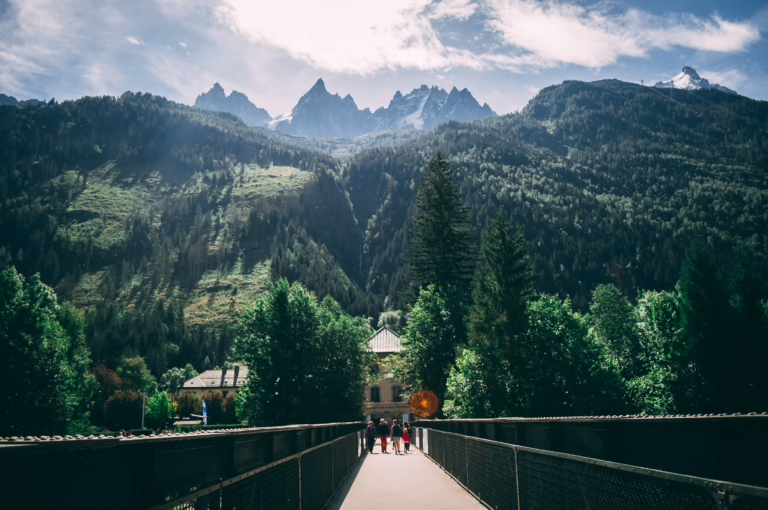
Guide to Pyrenees; France’s Jagged and Sprawling Nature Reserve
Tucked away in the southwest corner of France along the border with Spain, lies one of Europe’s best-kept natural secrets: the Pyrenees National Park. Established in 1967, this pristine expanse of rugged mountain wilderness offers a dramatic landscape of jagged peaks, alpine meadows, crystal-clear lakes, and deep valleys carved by ancient glaciers.
Plan this trip with the Secret World app Organizza questo viaggio con l’app Secret World Organiza este viaje con la app Secret World Préparez ce voyage avec l’app Secret World Планируйте это путешествие в приложении Secret World 用 Secret World App 规划这次旅行
🌍 Secret World — the world’s largest digital travel guide, with millions of curated places, itineraries, and local stories. 🌍 Secret World — la più grande guida di viaggio digitale al mondo, con milioni di luoghi selezionati, itinerari e storie locali. 🌍 Secret World — la guía de viaje digital más grande del mundo, con millones de lugares seleccionados, itinerarios e historias locales. 🌍 Secret World — le plus grand guide de voyage numérique au monde, avec des millions de lieux sélectionnés, d’itinéraires et d’histoires locales. 🌍 Secret World — крупнейший в мире цифровой путеводитель с миллионами отобранных мест, маршрутов и локальных историй. 🌍 Secret World —— 全球最大的数字旅行指南,汇集数百万精选景点、行程和本地故事。
See all the places from this guide on an interactive map, save them to your own trip, and discover more hidden spots nearby. Guarda tutti i luoghi di questa guida su una mappa interattiva, salvali nel tuo itinerario e scopri altri posti nascosti nei dintorni. Ve todos los lugares de esta guía en un mapa interactivo, guárdalos en tu propio viaje y descubre más rincones ocultos cerca de ti. Voyez tous les lieux de ce guide sur une carte interactive, enregistrez-les dans votre voyage et découvrez encore plus de pépites cachées à proximité. Смотрите все места из этого гайда на интерактивной карте, сохраняйте их в своё путешествие и находите ещё больше скрытых локаций рядом. 在互动地图上查看本指南中的所有地点,把它们保存到自己的行程,并发现更多附近的隐藏景点。
The beautiful national park spans over 457 square kilometers, extending across two French provinces, Hautes-Pyrénées and Pyrénées-Atlantiques. It borders the Spanish Ordesa y Monte Perdido National Park, forming a UNESCO-designated transboundary World Heritage Site. Here’s our comprehensive guide to Pyrenees National Park;
Please Download Our Mobile App here.
Overview of Pyrenees National Park
Pyrenees National Park forms part of the sweeping Pyrenees mountain range that stretches across the border into Spain. It’s found in the French provinces of Hautes-Pyrénées and Pyrénées-Atlantiques. This protected area sits opposite Spain’s Ordesa and Monte Perdido National Park, together creating a transboundary sanctuary for diverse ecosystems.
Both parks share similar vegetation, with woodlands made up of scots pine, silver birch, downy oak, common ash, willows, and silver fir. As the elevation climbs beyond 2,000 meters, mountain pine becomes the dominant tree species, marking the transition into alpine territory. Between 1,700 and 3,000 meters, high-mountain meadows come alive with vibrant flowering plants like bellflower.
You’ll also encounter Pyrenean violet, long-leafed butterwort, and the iconic edelweiss, a symbol of the park’s alpine identity. The landscape is equally varied, shaped by glaciers over millennia into dramatic river gorges, turquoise glacial lakes, and thunderous waterfalls.
Wildlife in Pyrenees National Park


The Pyrenees National Park shelters an exceptional variety of wildlife, thriving across its diverse landscapes of alpine meadows, dense forests, and rocky cliffs. Among its most iconic inhabitants is the brown bear, a powerful yet elusive symbol of the region that has been reintroduced and now roams the remote highlands.
Agile chamois, resembling goat-antelopes, skillfully navigate steep, rugged slopes, while wild boars forage through forest underbrush. In the meadows and scree-covered slopes, marmots can often be seen basking in the sun or heard issuing sharp whistles as alarm calls. Badgers, known for their burrowing prowess, emerge at dusk from underground dens.
Also, red foxes are frequently spotted across a range of habitats, from woodland to open grasslands. The birdlife within the park is equally dynamic, with raptors like the majestic golden eagle and the rare bearded vulture patrolling the peaks. Griffon vultures, with their wide wingspans, are commonly seen circling on thermals in search of carrion. Other birdlife include; black grouse, capercaillie, and numerous songbirds.
Best Time to Visit Pyrenees National Park
The best time to visit Pyrenees National Park largely depends on what kind of experience you’re after. However, the most favorable period is typically between June and September. During these summer months, the weather is warm and ideal for hiking, mountain biking, and exploring the park’s diverse terrain.
But it’s worth noting that this is also when the park receives the most visitors. If you dread crowds, September stands out as a particularly attractive time. The month offers the lowest chance of rain and fewer crowds as the high season tapers off.
Spring (from April to mid-June) and autumn (from late September through October) are excellent alternatives for travelers seeking quieter trails and breathtaking natural beauty. In spring, wildflowers bloom and the valleys turn lush green, while autumn showcases vibrant foliage in regions like Ordesa, Aigüestortes, and Navarre.
Though winter (November through February) is the least popular season for general sightseeing due to colder, harsher conditions, it transforms the landscape into a snow-covered wonderland. This time of year is ideal for skiing and snowshoeing, offering a peaceful, frozen version of the park that’s equally captivating in its own right.
Getting to Pyrenees National Park


Reaching Pyrenees National Park from Paris offers several travel options, each with its own advantages depending on your schedule and preferences. One of the most convenient ways is to take a high-speed TGV train from Paris Montparnasse to Lourdes or Pau, which serve as primary gateways to the park. The journey is both comfortable and relatively quick, making it ideal for travelers who want to enjoy a hassle-free trip.
From Lourdes, you may need to take a connecting regional train or bus to reach specific trailheads or park villages. For a more immersive experience, hop aboard the Little Yellow Train, a narrow-gauge railway that winds its way through the Pyrenees. The journey showcases breathtaking mountain vistas along the route.
Alternatively, you fly into nearby airports such as Tarbes-Lourdes-Pyrénées, Pau Pyrénées, or even Biarritz – Anglet – Bayonne and then travel by bus or train. Driving from Paris is also possible but the distance is roughly 821 kilometers, so it’s best suited to those planning a road trip to explore the countryside along the way.
Other Activities in Pyrenees National Park
Beyond its towering peaks and dramatic cirques, Pyrenees National Park offers an invigorating immersion into nature’s grandeur. The park is a sanctuary of unspoiled beauty, where you are treated to cascading waterfalls, rugged granite cliffs, sweeping mountain vistas, and countless trails.
While scenic drives offer glimpses of the surreal terrain, the most rewarding experiences come on foot. These adventure offer the chance to enjoy the crisp alpine air while exploring more than 135 trails that crisscross the region. These paths vary widely in difficulty, with many rated as challenging due to the steep elevation changes and high-altitude terrain.
The natural hot springs of Ax-les-Thermes, Bagnères-de-Luchon, and Eaux-Chaudes offer a soothing contrast to the park’s rugged terrain. These thermal waters provide a perfect blend of adventure and relaxation in one of France’s most breathtaking natural settings.
Park Fees in Pyrenees National Park


Visiting the Pyrenees National Park is free of charge. However, you should be aware that certain services or activities—like overnight camping in designated spots—may involve additional costs. In some cases, amenities such as guided tours or specific recreational facilities could also carry separate charges.
Additionally, a number of the park’s hot springs are located on privately owned land, where access might be restricted or require a fee. It’s always a good idea to consult with local park authorities or visitor centers ahead of time to get the most up-to-date information on any potential costs.
FAQs
Is Pyrenees National Park worth visiting?
Yes, Pyrenees National Park is widely regarded as a destination well worth visiting, especially for those who appreciate unspoiled nature and outdoor adventure. The park provides an ideal setting for a wide range of activities such as hiking, trekking, and soaking in the spectacular mountain scenery.
Do you need a car in the Pyrenees?
While it’s possible to reach the Pyrenees by train or bus, having a car is highly recommended for exploring the region in depth. The villages are often small, scattered, and tucked into remote mountain valleys, making public transportation options limited and schedules irregular. If you’re planning to hike, visit lakes, or reach trailheads and scenic viewpoints, you’ll find that many of these outdoor sites aren’t accessible by bus.
Conclusion
The Pyrenees National Park is more than a picturesque mountain landscape—it’s a living, breathing ecosystem steeped in culture and mystery. It invites you to slow down, breathe in the alpine air, and rediscover the rhythms of nature.
Take this guide with you on the road Porta questa guida con te in viaggio Lleva esta guía contigo en el viaje Emportez ce guide avec vous sur la route Возьмите этот гид с собой в путешествие 旅途中随身携带本指南
Don’t just read about this place – use this guide while you’re actually there. Non limitarti a leggere di questo luogo: usa questa guida mentre sei davvero lì. No te limites a leer sobre este lugar: usa esta guía mientras estás realmente allí. Ne vous contentez pas de lire sur ce lieu : utilisez ce guide quand vous êtes vraiment sur place. Не просто читайте об этом месте — используйте этот гид, когда вы действительно здесь. 不要只在网上看看这个地方——真正到访时也用这份指南。
- See all these places on a live interactive map
- Vedi tutti questi posti su una mappa interattiva in tempo reale
- Ve todos estos lugares en un mapa interactivo en vivo
- Voyez tous ces lieux sur une carte interactive en temps réel
- Смотрите все эти места на интерактивной онлайн-карте
- 在互动地图上查看所有这些地点
- Save this guide as a trip and edit it on the go
- Salva questa guida come itinerario e modificala in qualsiasi momento
- Guarda esta guía como un viaje y edítala sobre la marcha
- Enregistrez ce guide comme itinéraire et modifiez-le à tout moment
- Сохраняйте этот гид как маршрут и редактируйте его в пути
- 将本指南保存为自己的行程,并随时编辑
- Discover more hidden spots around you with one tap
- Scopri altri posti nascosti intorno a te con un solo tap
- Descubre más rincones ocultos a tu alrededor con un solo toque
- Découvrez encore plus de lieux cachés autour de vous en un seul clic
- Находите ещё больше скрытых локаций вокруг одним касанием
- 一键发现你周围更多隐藏景点