Guide to Queulat: Chile’s Frosty Nature Reserve
Located in Chile’s southern Aysén Region, Queulat National Park is a true testament to the raw beauty and dramatic landscapes of Patagonia. The national park spans dense temperate rainforests, glacial fjords, and rugged mountains, offering an environment that feels both untamed and serene.
Plan this trip with the Secret World app Organizza questo viaggio con l’app Secret World Organiza este viaje con la app Secret World Préparez ce voyage avec l’app Secret World Планируйте это путешествие в приложении Secret World 用 Secret World App 规划这次旅行
🌍 Secret World — the world’s largest digital travel guide, with millions of curated places, itineraries, and local stories. 🌍 Secret World — la più grande guida di viaggio digitale al mondo, con milioni di luoghi selezionati, itinerari e storie locali. 🌍 Secret World — la guía de viaje digital más grande del mundo, con millones de lugares seleccionados, itinerarios e historias locales. 🌍 Secret World — le plus grand guide de voyage numérique au monde, avec des millions de lieux sélectionnés, d’itinéraires et d’histoires locales. 🌍 Secret World — крупнейший в мире цифровой путеводитель с миллионами отобранных мест, маршрутов и локальных историй. 🌍 Secret World —— 全球最大的数字旅行指南,汇集数百万精选景点、行程和本地故事。
See all the places from this guide on an interactive map, save them to your own trip, and discover more hidden spots nearby. Guarda tutti i luoghi di questa guida su una mappa interattiva, salvali nel tuo itinerario e scopri altri posti nascosti nei dintorni. Ve todos los lugares de esta guía en un mapa interactivo, guárdalos en tu propio viaje y descubre más rincones ocultos cerca de ti. Voyez tous les lieux de ce guide sur une carte interactive, enregistrez-les dans votre voyage et découvrez encore plus de pépites cachées à proximité. Смотрите все места из этого гайда на интерактивной карте, сохраняйте их в своё путешествие и находите ещё больше скрытых локаций рядом. 在互动地图上查看本指南中的所有地点,把它们保存到自己的行程,并发现更多附近的隐藏景点。
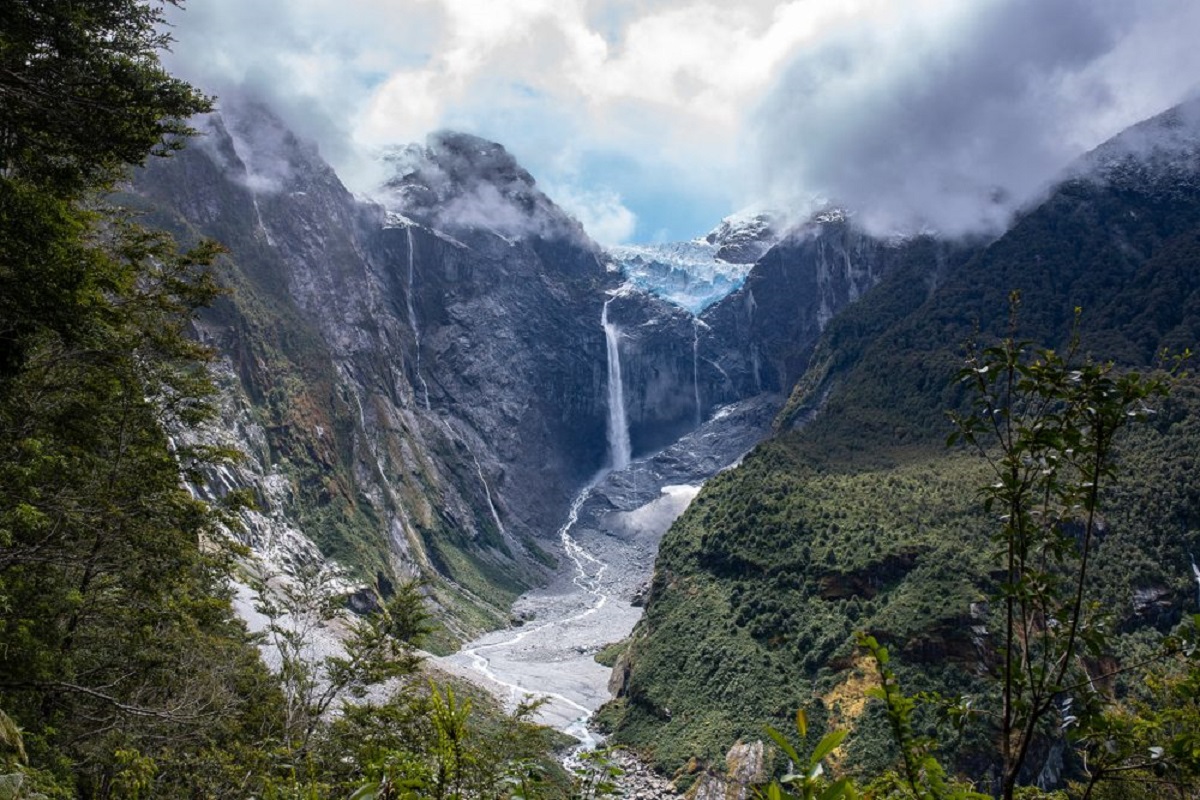
One of the park’s most iconic features is the Queulat Hanging Glacier. This ice formation cascades down a steep cliff, suspended above the verdant valley below. Its otherworldly beauty draws photographers, hikers, and nature lovers from around the world. The park is also home to various waterfalls, lakes, and rivers that dot its landscape. Here’s our comprehensive guide to Queulat National Park;
Please Download Our Mobile App here.
Overview of Queulat National Park
Queulat National Park is located in the southern reaches of Chile just north of Laguna San Rafael National Park. Established in 1983, the park spans an impressive 595 square miles (1,541 square kilometers) and is largely cloaked in temperate rainforest.
Its name, Queulat, comes from the language of the indigenous Chonos people and translates to the ‘sound of waterfalls.’ The park is renowned for its dense evergreen forests that cover the glacier-capped mountains of the Puyuhuapi Volcanic Group and the Patagonian Andes. Here, ice fields and snow-dusted peaks dominate the skyline.
The forests of Queulat are part of the Valdivian temperate rainforest, home to coigue, tepu, tepa, and nalca trees. Higher elevations are populated by lenga and Magellan’s beech. Glaciers carve through the mountainous terrain, with the largest stretching up to seven miles (12 kilometers) long.
Queulat Hanging Glacier is particularly the most impressive, covering 31 square miles (80 square kilometers) and reaches an elevation of 6,198 feet (1,889 meters). Meltwater from the snow-capped peaks creates numerous waterfalls throughout the park like the Cascada de Ventisquero Colgante, which pours into the Tempanos River.
Also Read: Best Resorts in Chile.
Wildlife in Queulat National Park


Wildlife in Queulat National Park may not be the park’s main attraction, but it is certainly present for those willing to look closely. One of the most elusive residents is the kodkod, a small wild cat reminiscent of an ocelot and highly prized by observers lucky enough to spot it. Other mammals that inhabit the forested areas include the pudu, the world’s smallest deer, the coypu, and the playful river otter.
Birdlife is more abundant, with the Magellanic woodpecker, Chiloe wigeon, flying streamer, red-gartered coot, and ringed kingfisher commonly seen. Birdlife is particularly abundant around the hanging glacier. The forests also shelter species such as the Chucao, the Black Woodpecker, Hued Hued, the tiny yet vibrant Picaflor Chico, and the Cachaña, or Austral Parakeet.
Among the smaller forest mammals, you’ll encounter the Piche, Quirquincho, Cuy Chico, Vizcacha del Sur, and even the Huemul (South Andean Deer). In the fjords, there is a chance of seeing marine life such as dolphins and seals. Many of these visit for short periods and migrate to other regions, so plan your trip accordingly if they are a major draw.
Best Time to Visit Queulat National Park
The ideal time to visit Queulat National Park is during the Chilean summer (December to February). During these months, the weather is generally the most pleasant and conducive to hiking and exploring the park’s stunning landscapes. This period also offers long daylight hours and relatively stable weather conditions.
However, it is also the peak season which means the trails and viewpoints can be crowded, particularly in February. For those seeking a quieter experience, the shoulder months of November and March provide a good alternative. November tends to be cooler and breezier, while March offers cooler temperatures, fewer visitors, and the chance to witness the park’s autumn colors in full display.
The park’s temperate rainforest climate brings frequent rain and high humidity throughout the year, with winter months experiencing the heaviest rainfall. For wildlife enthusiasts, particularly those interested in spotting dolphins, seals, and occasionally whales along the coastal areas, the period between January and March is ideal. It coincides with the Patagonian summer.
Getting to Queulat National Park


Getting to Queulat National Park requires a bit of planning. The park is located in the northern sector of Chile’s Carretera Austral, roughly halfway between Coyhaique and Chaitén. From either town, the drive takes about four hours, winding through the dramatic landscapes of Patagonia. For most travelers coming from Santiago, the easiest route is to fly into Balmaceda Airport.
From Balmaceda, you can take a bus or drive north along the Carretera Austral for about 104 miles to reach Puerto Cisnes. Another option is to fly to Puerto Montt and continue by bus or ferry to Chaitén. From there, take a bus north to Puyuhuapi, which sits close to the park entrance. If you prefer an exclusive experience, there are several car rentals in Puerto Cisnes and Puerto Montt that offer competitive rates.
The drive along the Carretera Austral is part of the famed Route of the Parks. It passes through Pumalín National Park and skirting the edges of Hornopirén and Alerce Andino, offering travelers a scenic introduction to the region. However, it’s worth noting that some sections are entirely gravel, so it’s important to get a 4×4 for a seamless ride.
Other Activities in Queulat National Park
Queulat National Park offers a wide array of activities for nature enthusiasts and adventure seekers. The Queulat Hanging Glacier is the crown jewel of the park. It is enveloped by the lush temperate rainforest and provides some of the most striking vistas in the park. For those seeking relaxation after a long journey or a demanding hike, the Termas de Goñoti hot springs offer a soothing retreat.
On the edge of the Puyuhuapi Fjord, you’ll find hotsprings linked to the nearby Melimoyu volcano. The park also features water-based activities, with kayaking being a particularly popular option. You’ll also enjoy paddling along the Queulat Fjord, surrounded by untouched rainforest and dramatic waterfalls.
Hiking and trekking remain the main ways to explore the park. The Mirador del Ventisquero Trail leads to a glacial moraine with breathtaking views over the lagoon. The longer Los Pumas Trail follows Lago Risopatrón before climbing to the tranquil Los Pumas Lagoon. For those with limited time, the Mirador Panorámico Trail offers a short but rewarding 30-minute walk to a viewpoint overlooking the hanging glacier.
Park Fees in Queulat National Park

Admission fees in Queulat vary depending on nationality and age. Foreign tourists pay around CLP 8,000 to 9,000 for admission while Chilean citizens pay about CLP 4,000 to 4,500. The park also offers discounted rates for adolescents and free entry for children and seniors.
FAQs
Is Queulat National Park worth visiting?
Yes, Queulat is absolutely worth visiting, as it captures the very essence of Chilean Patagonia’s untamed beauty. The park is home to lush temperate rainforests, glacial fjords, and the world-famous Ventisquero Colgante, or Hanging Glacier. Visitors can also explore a variety of trails that lead to panoramic viewpoints. The park also offers opportunities for kayaking, wildlife spotting, and photography.
How long to spend in Queulat National Park?
A full day in Queulat is enough to experience its main attractions. It allows plenty of time to hike the moderate trails, take in panoramic views, and enjoy the surrounding forests and waterfalls. However, for those seeking a deeper adventure, staying longer opens up more possibilities. You’ll have plenty of time for multi-day treks, horseback riding across the park’s valleys, or tackling some of its rugged rock-climbing areas.
Conclusion
Queulat National Park offers more than just scenic beauty. It is a place to connect with nature, to witness the power of glacial forces, and to appreciate the delicate balance of ecosystems. For those seeking adventure, solitude, and breathtaking landscapes, Queulat provides a glimpse of Chilean Patagonia in its purest form.
Take this guide with you on the road Porta questa guida con te in viaggio Lleva esta guía contigo en el viaje Emportez ce guide avec vous sur la route Возьмите этот гид с собой в путешествие 旅途中随身携带本指南
Don’t just read about this place – use this guide while you’re actually there. Non limitarti a leggere di questo luogo: usa questa guida mentre sei davvero lì. No te limites a leer sobre este lugar: usa esta guía mientras estás realmente allí. Ne vous contentez pas de lire sur ce lieu : utilisez ce guide quand vous êtes vraiment sur place. Не просто читайте об этом месте — используйте этот гид, когда вы действительно здесь. 不要只在网上看看这个地方——真正到访时也用这份指南。
- See all these places on a live interactive map
- Vedi tutti questi posti su una mappa interattiva in tempo reale
- Ve todos estos lugares en un mapa interactivo en vivo
- Voyez tous ces lieux sur une carte interactive en temps réel
- Смотрите все эти места на интерактивной онлайн-карте
- 在互动地图上查看所有这些地点
- Save this guide as a trip and edit it on the go
- Salva questa guida come itinerario e modificala in qualsiasi momento
- Guarda esta guía como un viaje y edítala sobre la marcha
- Enregistrez ce guide comme itinéraire et modifiez-le à tout moment
- Сохраняйте этот гид как маршрут и редактируйте его в пути
- 将本指南保存为自己的行程,并随时编辑
- Discover more hidden spots around you with one tap
- Scopri altri posti nascosti intorno a te con un solo tap
- Descubre más rincones ocultos a tu alrededor con un solo toque
- Découvrez encore plus de lieux cachés autour de vous en un seul clic
- Находите ещё больше скрытых локаций вокруг одним касанием
- 一键发现你周围更多隐藏景点