Guide to Spending a Weekend in Beijing, China
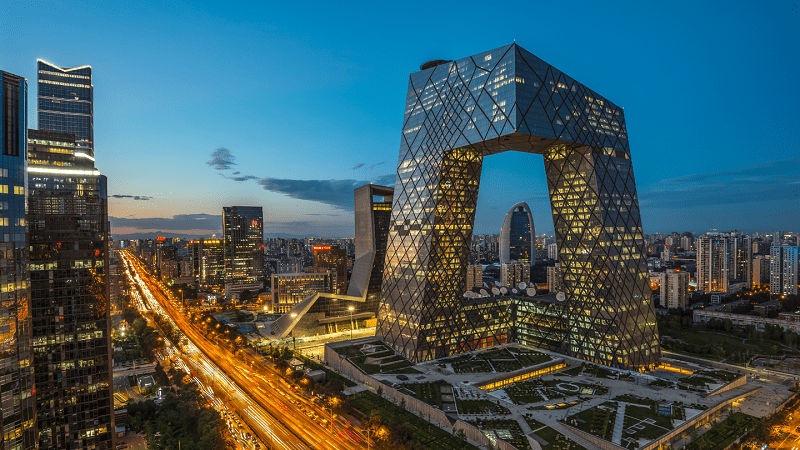
Beijing is an immensely explosive adventure with exceptional cultural and learning experiences in every corner. The city is enormous, electrifying, and unapologetically complex—equal parts imperial grandeur, culinary playground, and modern megacity humming at 14 million beats per minute. In just a weekend, you’ll sprint between ancient temples, sip tea, then elbow your way through a subway that feels like a small country.
Plan this trip with the Secret World app Organizza questo viaggio con l’app Secret World Organiza este viaje con la app Secret World Préparez ce voyage avec l’app Secret World Планируйте это путешествие в приложении Secret World 用 Secret World App 规划这次旅行
🌍 Secret World — the world’s largest digital travel guide, with millions of curated places, itineraries, and local stories. 🌍 Secret World — la più grande guida di viaggio digitale al mondo, con milioni di luoghi selezionati, itinerari e storie locali. 🌍 Secret World — la guía de viaje digital más grande del mundo, con millones de lugares seleccionados, itinerarios e historias locales. 🌍 Secret World — le plus grand guide de voyage numérique au monde, avec des millions de lieux sélectionnés, d’itinéraires et d’histoires locales. 🌍 Secret World — крупнейший в мире цифровой путеводитель с миллионами отобранных мест, маршрутов и локальных историй. 🌍 Secret World —— 全球最大的数字旅行指南,汇集数百万精选景点、行程和本地故事。
See all the places from this guide on an interactive map, save them to your own trip, and discover more hidden spots nearby. Guarda tutti i luoghi di questa guida su una mappa interattiva, salvali nel tuo itinerario e scopri altri posti nascosti nei dintorni. Ve todos los lugares de esta guía en un mapa interactivo, guárdalos en tu propio viaje y descubre más rincones ocultos cerca de ti. Voyez tous les lieux de ce guide sur une carte interactive, enregistrez-les dans votre voyage et découvrez encore plus de pépites cachées à proximité. Смотрите все места из этого гайда на интерактивной карте, сохраняйте их в своё путешествие и находите ещё больше скрытых локаций рядом. 在互动地图上查看本指南中的所有地点,把它们保存到自己的行程,并发现更多附近的隐藏景点。
It’s chaotic, it’s mesmerizing, and it rewards anyone brave enough to dive in with curiosity—and comfortable shoes. If you’re in Beijing for a short weekend vacation or business meeting, we have a few ideas to help elevate your experience. Here’s our guide to spending a weekend in Beijing;
Best Time to Visit Beijing


The best time to visit Beijing is during spring from March to May and autumn from September to November. During these seasons, the city strikes a perfect balance between mild weather and manageable crowds. Spring warms up from around 10°C to 25°C, bringing cherry blossoms, tulips, and peonies to life in parks and palace gardens.
These conditions make it ideal for long walks through the Forbidden City or scenic hikes along the Great Wall—though March can still feel a bit crisp. Summer arrives with heat and humidity that often push temperatures toward 35°C, along with lively festivals and bustling night markets. However, higher hotel prices and heavy crowds are part of the deal.
Autumn follows with warm, dry days and brilliant foliage, especially in October and November. However, steer clear of the first week of October, when Golden Week turns every attraction into a human ocean. Winter (December to February) brings freezing temperatures ranging from about -6°C to 5°C, plus occasional snow that blankets the city in quiet charm. It’s a peaceful time for sightseeing if you’re bundled up enough to enjoy it.
Also Read: Beijing Practical Guide.
Top Things to Do in Beijing
Explore the Forbidden Palace Museum


The Forbidden Palace Museum is one of Beijing’s most captivating landmarks, offering a glimpse into the ceremonial world of the Ming and Qing emperors. This vast imperial complex, often called the Forbidden City, encompasses nearly 1,000 buildings arranged within imposing walls and a broad moat.
While here, you can spend hours wandering through its courtyards, taking in ornate details, sweeping roofs, and a layout carefully engineered to symbolize power and cosmic order. Tickets must generally be booked in advance. However, same-day purchases are still be possible but entry is capped at 80,000 tickets per day, so latecomers risk missing out.
Walk the Tian’anmen Square
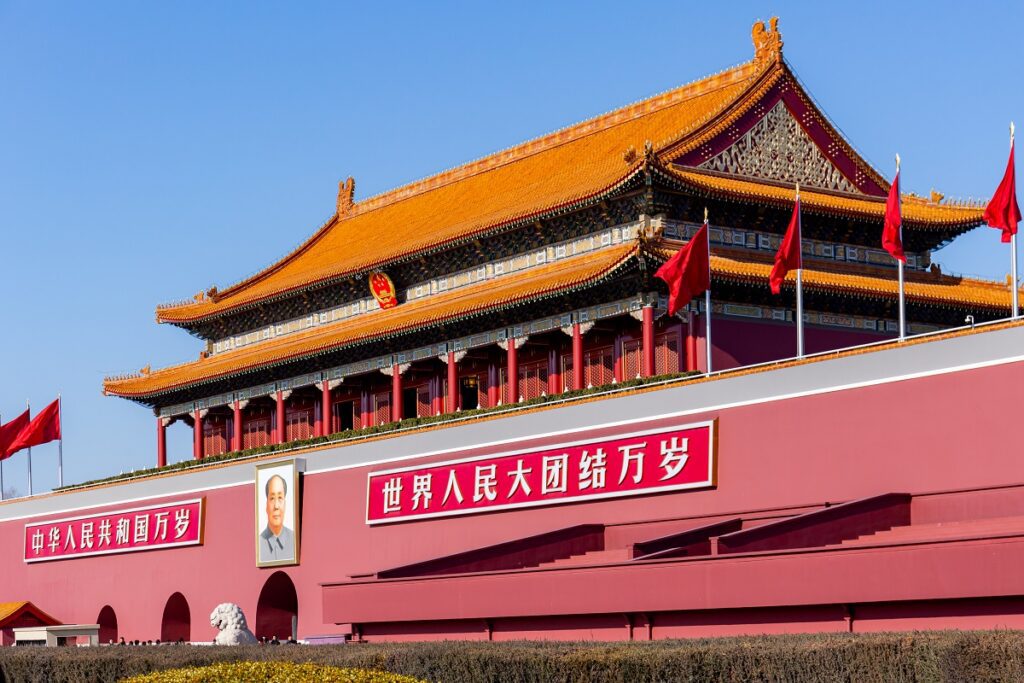
Tian’anmen Square is the world’s largest public square and has been the stage for several significant demonstrations in modern history. The most notable occurred in 1989, when students and protestors occupied the square for seven weeks, advocating for freedom of speech and freedom of the press. At its peak, approximately one million people filled the area.
Today, Tian’anmen Square is dominated by vast stretches of paved roads and sidewalks, flanked by imposing, concrete buildings in a distinctly communist style. Security is tight, with numerous police and guards monitoring the area. While there is little to visually capture attention now, walking across its wide sidewalks evokes a deep sense of the square’s historical significance.
Enjoy Chinese Cuisine in Beijing’s hutong alleyways
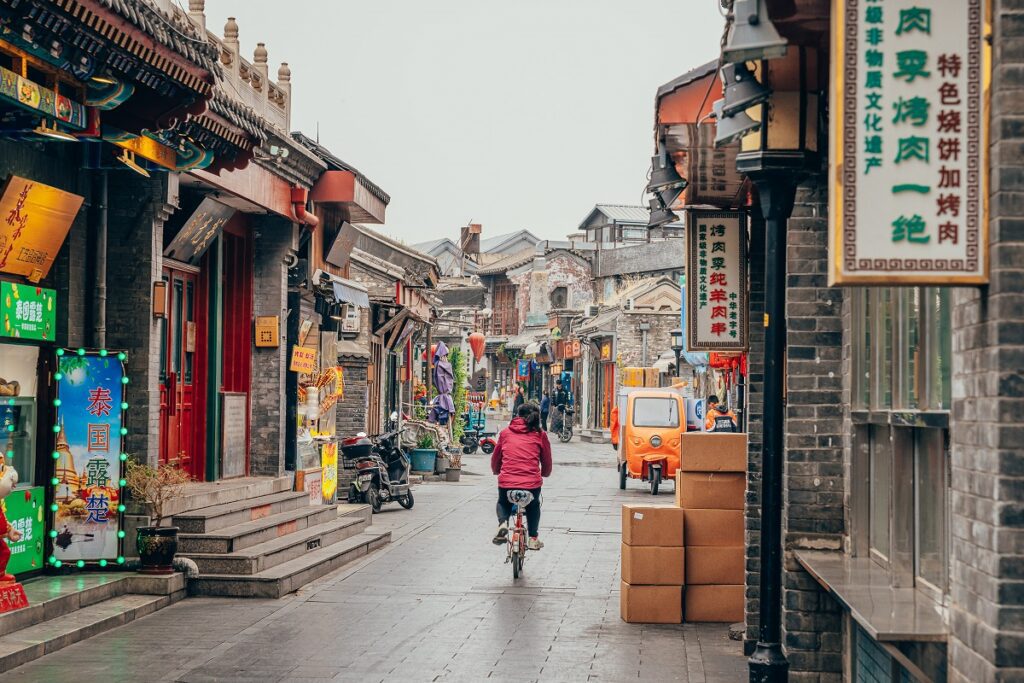
Hutongs are narrow streets or traditional alleyways, often lined with centuries-old courtyard homes, offering a window into the city’s historic life. Wandering through these winding lanes, you’ll encounter local markets, hidden restaurants, and culinary surprises tucked between the bricks. For those concerned about the language barrier, joining a small-group food tour is a smart move.
These tours combine history with a tasting adventure, allowing participants to sample a variety of dishes rather than sitting down at a single restaurant. Most tours begin at Shichahai metro station, guided by an English-speaking expert. The journey continues to Gulou for a unique take on Beijing hot pot, served in a copper pot with a tall central chimney, which adds a theatrical twist to the meal.
Along the way, you’ll enjoy local specialties like spring pancakes at a cozy husband-and-wife-run eatery. The experience wraps up with hearty Beijing noodles and craft beer at a local brewery. This culinary adventure not only satisfies hunger but also offers an immersive taste of Beijing’s culture and traditions.
Experience Nightlife in Nanluoguxiang
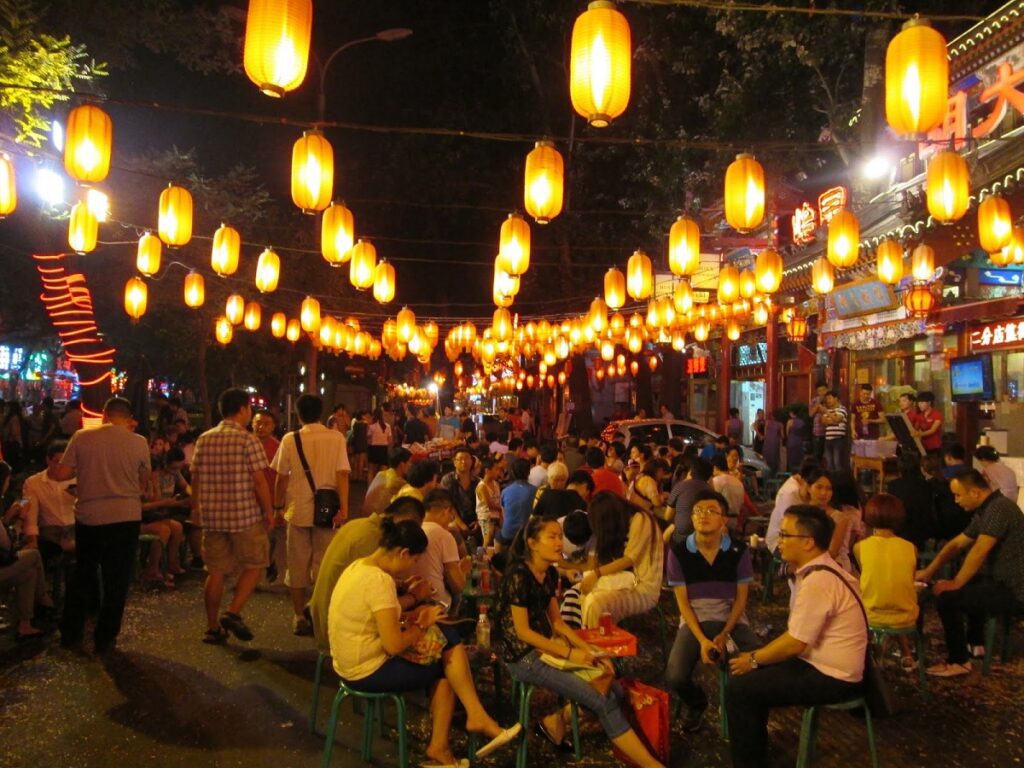
Nanluoguxiang is a bustling evening spot in Beijing that perfectly blends the charm of traditional hutong architecture with the energy of modern commerce. While it doesn’t carry the formal title of a “night market” like those in other cities, it functions in much the same way.
Here, you’ll find a lively mix of street food vendors, bakeries, coffee shops, and eateries that keep the area buzzing well into the night. Visitors can shop for crafts, souvenirs, and a variety of contemporary items along the main commercial lane. You can also wander into the smaller, quieter hutongs branching off to discover authentic courtyards and hidden corners.
Bars and cafés stay open late, making it an ideal spot for strolling, dining, and soaking in the evening atmosphere. The market is easily accessible by taking subway line 8 to the Nanluoguxiang station, making it a convenient stop for anyone exploring Beijing after dark.
Go Temple Hopping


Temple hopping in Beijing offers a fascinating glimpse into the city’s spiritual and cultural life, with countless temples tucked into its busy streets. Among the most noteworthy are the Lama Temple and the Confucius Temple, conveniently located next to each other for visitors relying on the metro. The Lama Temple is an expansive Buddhist complex where worshippers and tourists mingle.
Clouds of incense smoke hang in the air as devotees move between temples, burning incense and offering prayers. In contrast, the nearby Confucius Temple provides a quieter, more contemplative experience. With far fewer visitors, it offers calm and serenity, making it ideal for those who prefer reflection over the intensity of ritual activity.
Conclusion
A weekend in Beijing never feels long enough, but that’s part of the charm. The city is a place where past and present arm-wrestle constantly, and you’re invited to watch the match. You leave with tired legs, a full stomach, and the distinct sense that you’ve only met the first few layers of the doll. Beijing doesn’t try to be easy; it tries to be unforgettable—and that, it absolutely is.
Take this guide with you on the road Porta questa guida con te in viaggio Lleva esta guía contigo en el viaje Emportez ce guide avec vous sur la route Возьмите этот гид с собой в путешествие 旅途中随身携带本指南
Don’t just read about this place – use this guide while you’re actually there. Non limitarti a leggere di questo luogo: usa questa guida mentre sei davvero lì. No te limites a leer sobre este lugar: usa esta guía mientras estás realmente allí. Ne vous contentez pas de lire sur ce lieu : utilisez ce guide quand vous êtes vraiment sur place. Не просто читайте об этом месте — используйте этот гид, когда вы действительно здесь. 不要只在网上看看这个地方——真正到访时也用这份指南。
- See all these places on a live interactive map
- Vedi tutti questi posti su una mappa interattiva in tempo reale
- Ve todos estos lugares en un mapa interactivo en vivo
- Voyez tous ces lieux sur une carte interactive en temps réel
- Смотрите все эти места на интерактивной онлайн-карте
- 在互动地图上查看所有这些地点
- Save this guide as a trip and edit it on the go
- Salva questa guida come itinerario e modificala in qualsiasi momento
- Guarda esta guía como un viaje y edítala sobre la marcha
- Enregistrez ce guide comme itinéraire et modifiez-le à tout moment
- Сохраняйте этот гид как маршрут и редактируйте его в пути
- 将本指南保存为自己的行程,并随时编辑
- Discover more hidden spots around you with one tap
- Scopri altri posti nascosti intorno a te con un solo tap
- Descubre más rincones ocultos a tu alrededor con un solo toque
- Découvrez encore plus de lieux cachés autour de vous en un seul clic
- Находите ещё больше скрытых локаций вокруг одним касанием
- 一键发现你周围更多隐藏景点