Best Food Markets in Europe
Traveling across Europe as a foodie is like embarking on one long, delicious treasure hunt where every border crossed brings a completely new menu. One day you’re sipping espresso and devouring flaky pastries in Paris, the next you’re sampling creamy burrata in southern Italy.
Every region has its own specialties, recipes passed down through generations, and local ingredients that simply taste better where they’re grown. The best culinary discoveries often happen far from fancy restaurants—at local food markets where locals gather.
In markets, you’ll find locals arguing over tomatoes, chefs quietly source the day’s ingredients, locals debate which cheese deserves dinner. They’re loud, fragrant, wonderfully chaotic, and often far more memorable than another guided tour.
Whether housed inside magnificent nineteenth-century market halls or spilling across medieval town squares, Europe’s food markets celebrate regional traditions one delicious bite at a time. Here’s our list of the best food markets in Europe;
Il Quadrilatero, Italy

Walking through Il Quadrilatero feels like stepping into Bologna’s centuries-old pantry. Nestled in the heart of the medieval city, this historic market district perfectly reflects why Bologna proudly carries the nickname “La Grassa” (“The Fat One”). The maze of narrow lanes is lined with traditional salumerias, cheese shops, pasta makers, fishmongers, and specialty food stores.
Towering wheels of authentic Parmigiano Reggiano are carefully aged here. Also, freshly sliced mortadella—an iconic Bolognese invention—is carved directly from whole logs at the deli counter. One of the market’s greatest highlights is watching the sfogline. Here, skilled women hand-roll and cut fresh pasta using techniques passed down through generations.
Their delicate tortellini, ribbons of tagliatelle, and vibrant lasagne verde are sold by weight. Specialty shops also stock everything from everyday balsamic vinegar to precious Aceto Balsamico Tradizionale di Modena. It’s aged for at least 12 years and used sparingly, drop by drop.
Just beside the Quadrilatero, the covered Mercato delle Erbe complements the experience with colorful displays of seasonal fruits, vegetables, and butcher stalls. For the most authentic visit, arrive early in the morning before the crowds appear. At this time, you’ll see locals shopping for the day’s freshest ingredients and the market buzzes with its everyday rhythm.
Also Read: Best Food Markets Around the Globe.
Borough Market, England

Few food markets capture London’s culinary spirit quite like Borough Market. Located in the Southwark district near London Bridge, the market has occupied this historic site since at least the 12th century. Its elegant Victorian market halls, built in the 1850s, provide the striking backdrop visitors see today.
Here, you’ll find an outstanding mix of British artisan producers, premium imported ingredients, and international street food vendors. One of the market’s standout attractions is Neal’s Yard Dairy, whose renowned cheese stall is widely regarded as the country’s premier destination for British farmhouse cheeses.
Here, knowledgeable staff happily guide visitors through seasonal clothbound Cheddars, traditional territorial cheeses, and rich washed-rind varieties. Borough Market also reflects London’s multicultural character. You’ll find stalls serving everything from fragrant Ethiopian curries and handmade Italian pasta to authentic Spanish jamón and vibrant Middle Eastern Street food.
Cours Saleya, France
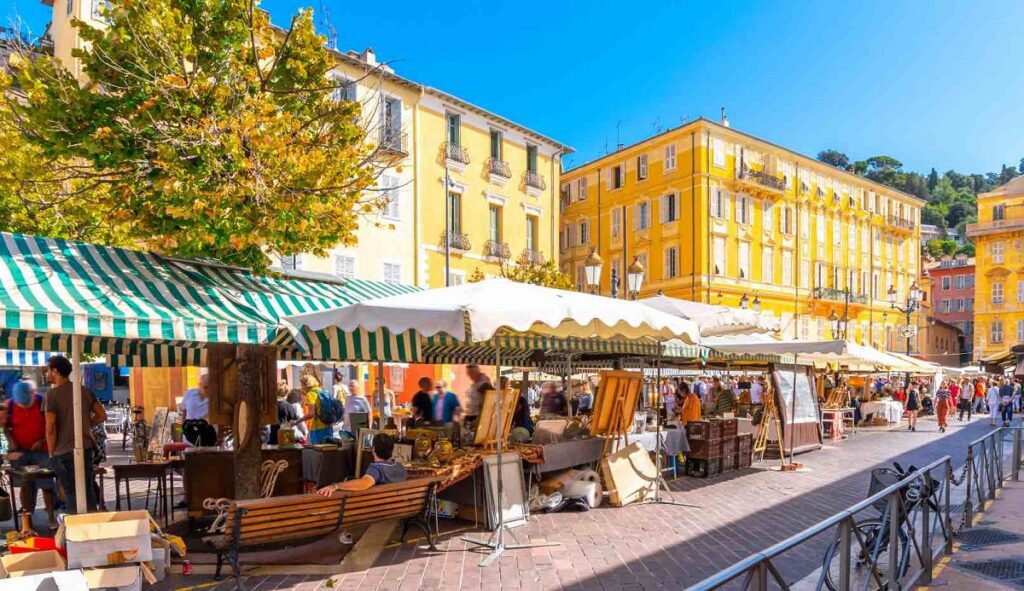
Cours Saleya is the lively open-air market that stretches along the heart of Nice’s Old Town. It’s framed by pastel-toned Baroque buildings that make it one of the most effortlessly photogenic markets in Europe. By morning, the square bursts into color as flower stalls spill across the space, creating a fragrant, painterly scene that has made it a favourite subject for photographers.
Later in the day, these give way to food vendors and antique sellers who reshape the market’s rhythm. The culinary identity here is deeply Niçois and Provençal. While here, don’t miss regional specialties like pissaladière (Nice’s signature onion and anchovy tart). You’ll also find freshly cooked socca, a crisp chickpea flatbread traditionally baked over wood fire and sold by weight.
Another worthwhile choice is petits farcis, vegetables stuffed with herbed breadcrumbs and local meats that reflect the area’s rustic, home-style cooking. Shelves of locally produced olive oils, often labeled with their specific variety and pressing mill, add another layer of southern French authenticity.
As the day unfolds, Cours Saleya shifts from a floral showcase into a bustling food and lifestyle market. The surrounding cafés offer an easy place to pause with an espresso or a glass of rosé and watch the scene unfold. Its location between the winding streets of the Old Town and the Mediterranean shoreline means that anything you buy here naturally becomes a seaside picnic within minutes.
Fisketorget, Norway

Fisketorget, the historic Fish Market in Bergen, sits directly on the city’s waterfront beneath the iconic colored wooden façades of Bryggen. Operating continuously since around 1200, it ranks among the continent’s oldest surviving markets. In its open-air section, you’ll encounter the raw character of Norway’s fishing culture up close.
Here, you’ll glimpse ice beds stacked with Atlantic salmon, Norwegian lobster, shrimp, crab, and notably large brown crabs. When winter closes in, the indoor market (added in 2012) keeps the tradition alive year-round.
It offers the chance to eat it on the spot in small specialist restaurants serving dishes like fish soup, smoked salmon, and shellfish platters. Summer transforms the experience again, as nearby Hardanger fjord farms bring in seasonal fruit such as strawberries, cherries, and apples.
The Markthal, the Netherlands
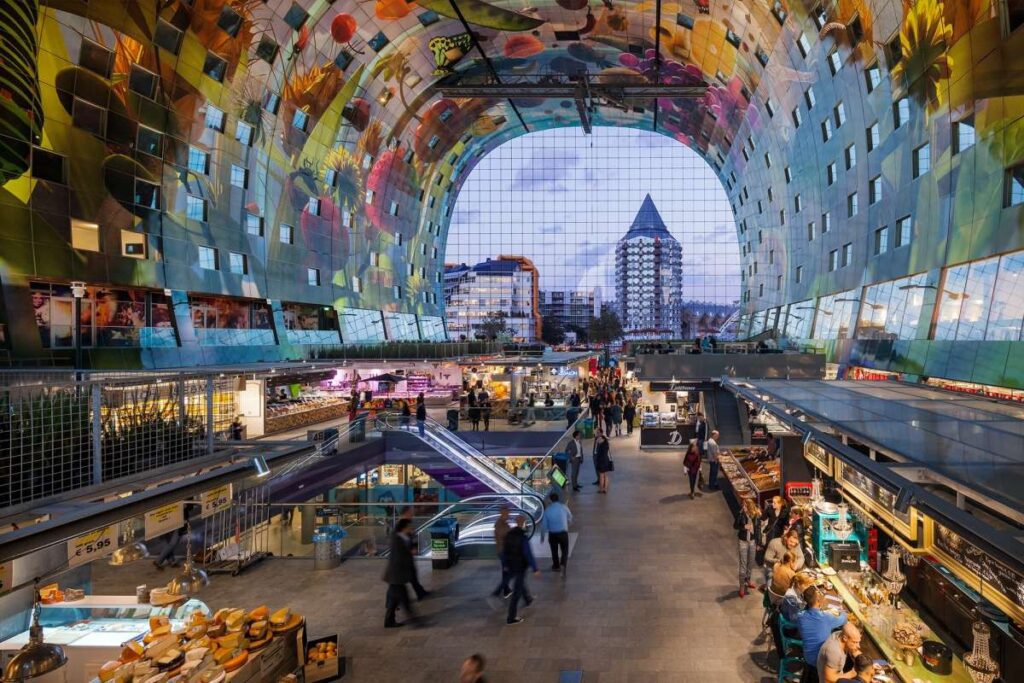
The Markthal in Rotterdam is less a food market and more a bold architectural statement that happens to be delicious. Designed by the Dutch firm MVRDV and opened in 2014, it takes the form of a vast horseshoe-shaped arch where food, housing, and public life are stacked.
Inside, a monumental ceiling artwork bursts with oversized fruits, vegetables, and insects. These are so large and vivid that it feels like a surreal Dutch still life hovering above the market floor. Below it, around 100 food stalls and 15 restaurants form a lively culinary ecosystem. Above, 228 apartments curve along the arch, with residents literally looking down onto the market from their kitchen windows.
Culinarily, the Markthal is as diverse as the city itself. Traditional Dutch staples like Gouda and Edam cheeses appear in both familiar and artisanal forms. You’ll also find freshly made stroopwafels cooked on iron griddles, and classic herring served the traditional way with raw onion.
Fresh fishmongers, butchers, and produce vendors maintain the structure of a working market, ensuring it is not just a food hall for visitors but a genuine daily hub for locals. What makes the Markthal especially striking is its urban context. Rotterdam is not trying to compete with Amsterdam’s postcard beauty; instead, it has built a reputation on modernity, resilience, and architectural ambition.
Conclusion
Europe’s best food markets offer far more than ingredients—they’re windows into local culture, history, and everyday life. Whether you’re bread in London or indulging in cheese in Bologna, every market tells a different story through its food.