
Guide to La Cangreja: Costa Rica’s Youngest National Park
La Cangreja National Park is one of Costa Rica’s lesser-known protected areas, offering a quiet and immersive escape into the country’s rich natural heritage. Located in the Central Pacific region, south of San José, the park is prized for its dense tropical forests, scenic hiking trails, and striking waterfalls.
Unlike Costa Rica’s more famous national parks, La Cangreja remains largely uncrowded, making it ideal for travelers seeking solitude. The park covers an area of rugged terrain that includes primary and secondary forest, steep slopes, and river valleys.
La Cangreja also plays an important role in protecting water sources for surrounding communities, as several rivers originate within its boundaries. These waterways feed into the Grande de Tárcoles River basin, making the park a vital ecological buffer against erosion and deforestation. Here’s our comprehensive guide to La Cangreja National Park;
Overview of La Cangreja National Park
La Cangreja National Park is the country’s youngest national park, only established in 2002. It is located in the province of San José, within the Puriscal canton, specifically in the Mercedes Sur and Chires districts. The main entrance sits about 35 kilometers southeast of Santiago de Puriscal, offering access to a landscape of steep hills, dense forest, and clear waterways.
The park’s name is derived from the Spanish word for “crab.” It comes from the distinctive shape of its highest hill, Cerro La Cangreja, which rises to 1,305 meters above sea level. According to a legend from the indigenous Güetar (Huetar) people, a giant crab once blocked the pass between two mountains in the park’s center.
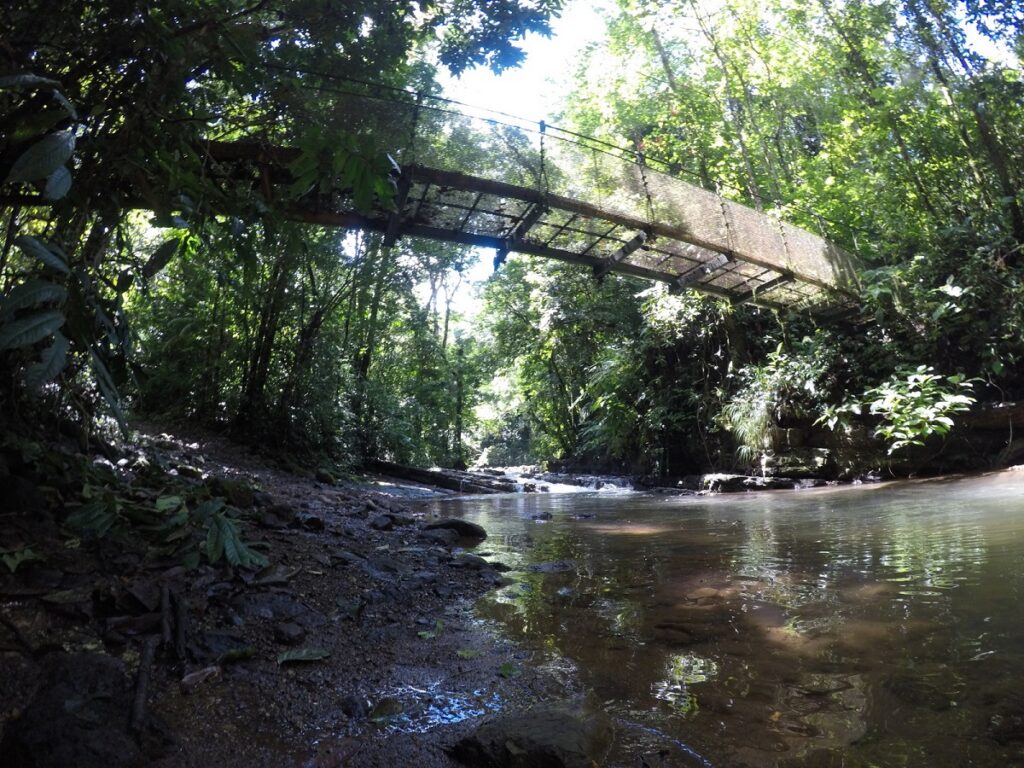
The local chief battled the creature, wounding it until it sought shelter among the rocks, forming the hill and surrounding formations that resemble a crustacean with claws. The park is an important sanctuary for the crystalline springs of the Río Negro and Quebrada Grande. These streams flow through naturally sculpted rock formations, creating serene spots where visitors can swim and relax.
Also Read: Best Resorts in Costa Rica.
Wildlife in La Cangreja National Park

La Cangreja National Park is a haven for wildlife enthusiasts. The park is home to more than 300 bird species, including vibrant macaws, colorful toucans, striking trogons, elusive sunbitterns, guans, hawks, hummingbirds, and wild turkeys. Mammals are abundant, ranging from big cats like pumas and ocelots to primates such as white-faced capuchin and howler monkeys.
Other notable species include coatis, agoutis, pacas, peccaries, deer, armadillos, kinkajous, and sloths, each adapted to the park’s rich ecosystem. Amphibians and reptiles add further diversity, with green and black poison dart frogs, red-eyed tree frogs, iguanas, and snakes, including the venomous fer-de-lance.
Best Time to Visit La Cangreja National Park
The ideal time to explore La Cangreja National Park largely depends on the type of experience visitors seek. During the dry season, which runs from December to April, trails are drier and weather conditions are generally sunny, making it perfect for hiking. The peak season is between January and April.
If your trip falls within this window, get there early in the morning to avoid the heat and crowds at popular spots like the Cangreja Waterfall. On the other hand, the wet season from May to November offers a different kind of appeal. Rainfall during these months transforms the forest into a lush, vibrant landscape, and waterfalls are at their fullest, creating spectacular scenery.
Visitor numbers are lower during this period, though some trails may be muddier and rain showers are more frequent. November is an excellent shoulder month, providing a balance of greenery, manageable weather, and fewer tourists. Nevertheless, early mornings, regardless of the season, tend to offer cooler temperatures and a more peaceful experience throughout the park.
Getting to La Cangreja National Park

The drive from the capital and central valley covers roughly 75 kilometers and typically takes around two hours. While stopping along roads with belongings in the car is typically discouraged due to risk of theft, the route to La Cangreja is an exception. The route offers scenic opportunities along the way.
If you’re coming from the airport or San José, consider a scenic detour to the Central Pacific, stop for a hike and a swim under a tropical waterfall en route. From the coast, routes from Quepos, Manuel Antonio, Jacó, or Hermosa all take roughly two hours. It can be enjoyable to ascend via one road and return along another, creating a loop.
The easternmost route 609 along the Río Pirris is recommended. Routes 239 or the westernmost road along the Río Turrubaritos provide alternative mountainous passages. All access roads are dirt or gravel, occasionally graded to reduce erosion, and feature bridges over rivers. Even in the rainy season, standard two-wheel-drive cars can reach the park, though travel may be slower due to potholes and uneven terrain.
For budget travelers, Tracopa operates a bus from downtown San José to Santa Rosa de Puriscal, departing each morning at 5:30. The fare is around 3,000 colones or five US dollars. Ensure to notify the driver that you are headed to La Cangreja. The bus makes two stops along this route. The first drop-off is about one kilometer above the park entrance. The next is four kilometers away near Santa Rosa, requiring a short uphill walk to the park office.
Other Activities in La Cangreja National Park
La Cangreja offers a variety of activities for nature enthusiasts and adventure seekers. The Sendero Río Negro y Plinia trail is a key route, stretching about 6 kilometers one way for a 12-kilometer round trip. Along the way, several trails branch off to cascadas, allowing visitors to enjoy multiple refreshing waterfalls set amid the dense greenery.
The Río Negro, the park’s main river, adds a serene and picturesque element to hikes, with its clear waters flowing through the forested valleys. For those drawn to panoramic views and unique geological features, Cerro La Cangreja is a striking rocky formation rising between 900 and 1300 meters in elevation.
Park Fees in La Cangreja National Park
La Cangreja National Park requires a modest admission fee, which varies depending on residency. Costa Rican citizens and residents pay 1,130 colones for adults, while children between the ages of 2 and 12 are charged 565 colones. Adults aged 65 and older can enter for free by presenting a valid ID, and all adults must show their identification upon entry.
For foreign visitors, the fee is set at $11.30 for adults and $5.65 for children. Payments are currently accepted only via debit or credit card, so visitors should plan accordingly before arriving at the park.
FAQs
Is La Cangreja National Park worth visiting?
Yes, La Cangreja National Park is definitely worth a visit. The park offers an off-the-beaten-path experience with impressive waterfalls, unique endemic plants, and a wide variety of wildlife. Birdwatchers will especially enjoy spotting species such as Scarlet Macaws and Trogons among the forest canopy.
How long to spend in La Cangreja National Park?
Plan to spend anywhere from a half day to a full day exploring its trails and natural attractions. The primary hike to Cangreja Waterfall typically takes between 3.5 and 5 hours for a round trip. For those looking to extend their visit, the park offers additional trails and areas like Las Pailas.
Conclusion
La Cangreja National Park represents a quieter, more intimate side of Costa Rica’s natural beauty. Its forests, wildlife, and rivers highlight the importance of conservation beyond the country’s well-known tourist destinations. For those willing to venture off the beaten path, the park offers a rewarding experience defined by tranquility, ecological significance, and unspoiled landscapes.