

Most Famous Landmarks in Europe Worth Visiting
When it comes to landmarks, Europe is treasure trove. Every corner you turn, there’s another grand monument casually existing as if it hasn’t changed the course of history or inspired a thousand postcards. The continent is essentially an open-air museum where ancient architects, royal egos, and master artists all conspired to build things so spectacular.
From towers that lean without falling to sky-piercing steel towers, Europe’s landmarks are a delightful mix of drama, brilliance, and architectural sass. If unsure where to start from, we have a list of landmarks to add to your bucket list. Here’s our list of famous landmarks in Europe worth visiting;
Big Ben & Houses of Parliament, UK
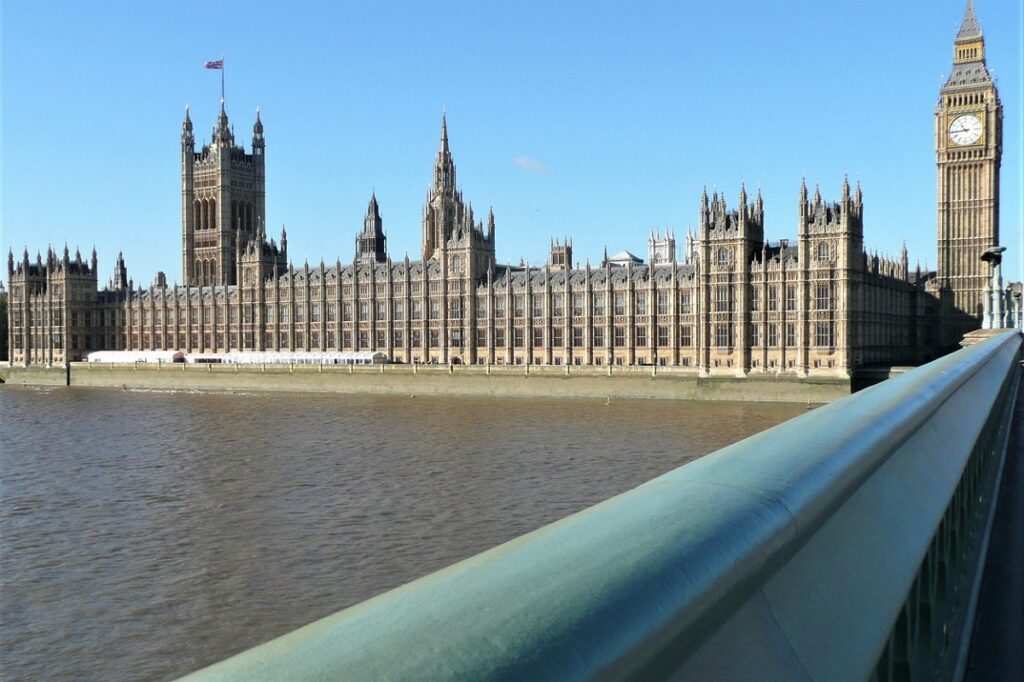
The Palace of Westminster carries nearly a millennium of history, originating in 1097 under King William II. For centuries it held the title of Britain’s oldest ceremonial hall, though the Gothic landmark seen today was reconstructed in 1854 after a devastating fire.
Now a commanding presence along the Thames, it remains the seat of the two houses of Parliament and the heartbeat of British governance. Completed in 1859, Big Ben quickly became the palace’s most iconic feature. Its four clock faces are celebrated for their precision, and the tower has stood as a defining emblem of the United Kingdom for more than 150 years.
Visitors can explore the interior throughout the year, excluding holidays, with guided and audio tours departing every 15 to 20 minutes between 9 a.m. and 4:15 p.m. Tours in multiple languages, including Spanish, French, Italian, and German, run daily and last about 75 minutes.
Also Read: Global Landmarks Worth Visiting.
Stonehenge, UK
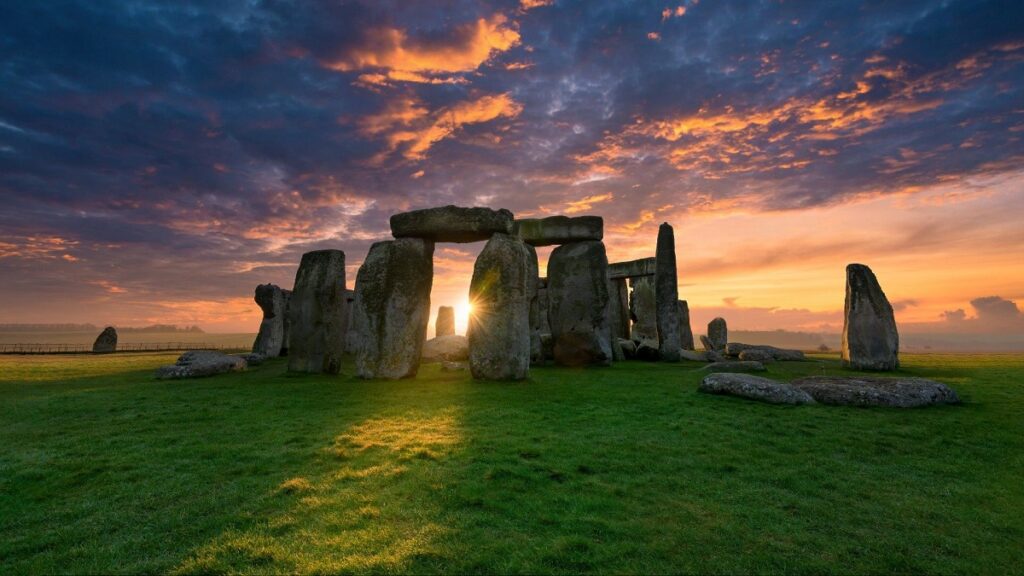
Stonehenge is one of Europe’s most extraordinary prehistoric landmarks. Today, you’ll get a glimpse into a world shaped over 5,000 years. It all began in 3000 BCE when early builders carved out a circular bank and ditch and created the 56 Aubrey Holes to store cremated remains.
The monument grew in ambition over the next millennium, culminating in the construction of the colossal sarsen stones. There’s a theory that these stones were hauled from the Marlborough Downs by hundreds of determined workers. These towering stones were arranged into a striking horseshoe topped with lintels that still frame the setting sun on midwinter’s day.
Beyond the iconic Stone Circle, the site reveals its deeper story through Neolithic houses. There’s a world-class exhibition, and a reconstructed village where visitors can test their strength against a mighty Sarsen stone and even encounter the face of a 5,500-year-old man.
Eiffel Tower, France

Named after engineer Gustave Eiffel, the Eiffel Tower rose above Paris in 1889 for the Exposition Universelle. It was a world fair where nations tried to outdo each other with architectural bravado. Its creation demanded two years of relentless work from 300 laborers and an impressive 2.5 million rivets.
This resulted in a 324-meter structure that briefly claimed the title of tallest human-made construction until New York’s Chrysler Building arrived in 1930. The tower was not always beloved; Paris’ artistic circles dismissed it as a metal asparagus and even planned its demolition in 1909. Its salvation came from an unexpected field: radiotelegraphy, which needed high vantage points for transmitting antennas.
Today, visitors can explore its three distinct levels. The spacious first floor offers an immersion film inside the Pavillon Ferrié, along with a cafe, gift shop, and a walkway. The second floor provides the finest city views, with telescopes, panoramic maps, and story windows revealing how the lifts operate. The top level delivers sweeping vistas reaching up to 60 kilometers on clear days.
The Colosseum, Italy

The Colosseum stands as Rome’s most enduring emblem, a colossal reminder of the Flavian Dynasty’s ambition and engineering genius. Constructed over roughly 25 years under Emperors Vespasian, Titus, and Domitian, this first-century amphitheater still holds the title of the largest open-air venue ever built.
In its prime, it hosted grand spectacles much like today’s stadiums, and its scale was equally impressive. It accommodated an estimated 50,000 to 80,000 spectators—numbers that place it in the same league as Denver’s Mile High Stadium. The Colosseum is a reminder that the ancient world understood spectacle, comfort, and crowd management in ways that still resonate in modern arenas.
Hagia Sophia, Turkey

Few structures embody the soul of a city as completely as Hagia Sophia. This monumental heart of Istanbul is a living witness to more than 1,500 years of shifting empires, faiths, and cultures. It was constructed in 537 CE as the crowning church of the Eastern Roman Empire. It later transitioned into a mosque after the Ottoman conquest in 1453, evolved into a museum, and today stands once again as a mosque.
Its immense dome creates an astonishing sense of space that seems to widen with every step inside. Also, its exceptional acoustics turn even quiet whispers into shimmering echoes that feel suspended in time. Nowhere else do Christian mosaics of emperors and saints share a home with sweeping Islamic calligraphy, the elegant Hüsn-i Hat panels inscribed with sacred names.
The City Walls of Dubrovnik, Croatia

The City Walls of Dubrovnik, whose earliest fortifications date back to the 9th century, stand as one of Europe’s most remarkable medieval defensive architecture. By the mid-14th century, the growing city strengthened its security with 15 square forts and thick stone barriers that reached 1.5 meters wide.
These barriers were inspired by Ottoman pressure across the region in the 15th century. Dubrovnik expanded and reinforced its walls until the entire Old Town was fully encircled by a two-kilometer system rising up to 25 meters high. The landward side, considered more vulnerable, was built up to 6 meters thick, while the sea-facing sections ranged from 1.5 to 3 meters.
Historically, entry was controlled through two grand gateways: the western Pile Gate and the eastern Ploče Gate. Both were equipped with drawbridges that were lifted at sunset as the city locked down for the night. A third opening, the Buža Gate, arrived much later in 1907 on the northern wall.
Conclusion
Europe, in all its grandeur, doesn’t just offer sights; it offers stories layered in centuries of ambition, artistry, and a touch of delightful eccentricity. Its landmarks aren’t just monuments; they’re characters in the world’s most elaborate theatre set. Visiting them isn’t just travel—it’s stepping into the chapters of a continent that always knew how to make an entrance.