Visiting London? Here is a guide to Royal Botanic Gardens
Spanning an impressive 330 acres, Kew Gardens is renowned for housing the most significant assortment of living plants. Situated in Surrey, southwest of London, amidst the picturesque landscapes along the banks of the river Thames, it finds its perch between Kew and Richmond.
Within Kew Gardens, one can encounter an astonishing diversity of over 30,000 plant species. The Garden also boasts the remarkable Herbarium, a treasure trove of botanical specimens exceeding seven million. Accessible exclusively to scholars, this vast collection includes specimens gathered by renowned English scientists and explorers like Charles Darwin and David Livingstone, further enhancing the institution’s esteemed reputation.
Established in 1759, Kew Gardens has emerged as one of England’s most sought-after tourist destinations, attracting over 2.1 million visitors annually. Whether fond of blossoming flowers, breathtaking architecture, or seeking solace in lush greenery, Kew Gardens offers an enchanting retreat. Its allure lies in the botanical wonders it harbors and the myriad of experiences it presents.
How to get to Royal Botanic Gardens
Bus
The bus is a convenient way of accessing the Royal Botanic Garden. The 441 bus route, originating from Balmain and passing through the QVB Building, operates from York Street and Town Hall every weekday from 10 am to 5 pm. This route also includes a stop at the Art Gallery of New South Wales.
Moreover, you can conveniently access Martin Place and Circular Quay as the bus stops there. During weekdays’ busiest morning and evening periods, the 200 route connecting Chatswood and Bondi also stops along Macquarie Street.
Train

The train is the most convenient means of transport to get to the Gardens. The Martin Place station, situated nearest to your location for those coming from the airport (T4 – South Coast Line) and serves as an excellent starting point. Moving from the station to St. James and Circular Quay is a straightforward walk, with the added advantage of both the T2 Airport, Inner West and South Line, and the T3 Bankstown Line, servicing those destinations.
When you reach Museum Station (T2 – Airport, Inner West and South Line and T3 – Bankstown Line), reach the Anzac Memorial on Liverpool Street. From there, continue your journey by strolling through Hyde Park, passing the Archibald Fountain, and proceeding along Art Gallery Road until you reach the Royal Botanic Garden.
When to visit Royal Botanic Gardens
Spring and summer are the ideal seasons to visit Kew Gardens. The gardens come alive in May with vibrant colors, as if awakening from a slumber. Tourists especially flock to witness the enchanting blooming of bluebells. However, during the summer, Kew Gardens truly captivates visitors with its utmost allure. In summer, guests are treated to a sensory feast, immersing themselves in the delightful fragrances of lavender, thyme, rosemary, sage, and oregano.
The air is filled with sweet scents, creating a serene atmosphere. Additionally, one can explore a variety of Mediterranean fruits and vegetables, including a remarkable selection of nine different species of aubergine. To truly experience the magnificence of Kew Gardens, summer offers an unparalleled opportunity.
Admission costs
Admission costs:
-Admission fees for adults at Kew Gardens are £15 at the gate. Alternatively, you can pay £16.50, including a donation, upon entering. If you prefer to buy your tickets in advance online, the cost is £14.
-Students, seniors, and people with disabilities can enter Kew Gardens for £14 at the gate. If you wish to donate, the ticket price is £15.50. Online purchases for this group are priced at £13.
-Children between the ages of 4 and 16 can enter Kew Gardens for £3.50 at the gate or £2.50 if tickets are purchased online.
-Family tickets are also available, ranging from £19 to £34 at the gate, depending on the family size. If you order online, prices range from £18 to £32.
Kew Gardens is open all year round except on December 24th and 25th. The gates open at 10 am.
What to see in Royal Botanic Gardens?
The Marianne North Gallery
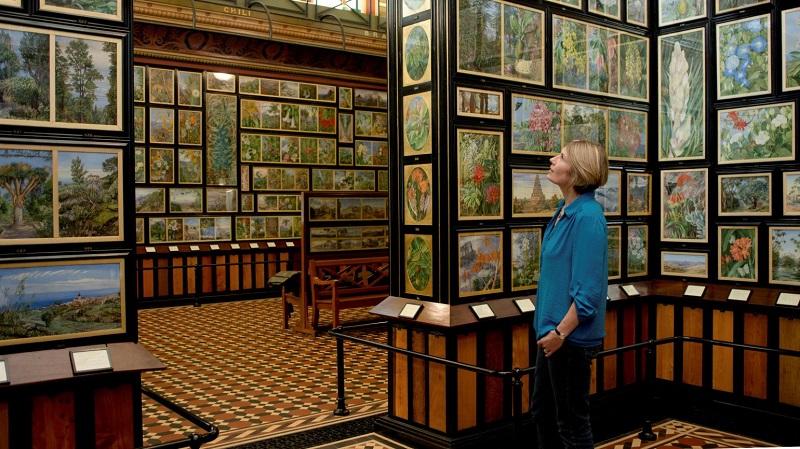
With many sights to explore at Kew Gardens, it’s easy to overlook the enchanting red brick edifice that shelters the Marianne North Gallery. Nevertheless, a daring spirit will be rewarded upon venturing inside. The exquisite interior boasts an array of wooden accents and floor tiles adorned with intricate stencil designs, serving as a splendid sanctuary for over 800 breathtaking botanical art pieces.
The Princess of Wales Conservatory
The Princess of Wales Conservatory, established in 1987, stands as the most recent addition to the remarkable glasshouses of Kew Gardens. This extraordinary structure encompasses ten computer-controlled climatic zones, harboring diverse habitats within. The designated section for carnivorous plants, including captivating Venus flytraps and elegant pitcher plants, is fascinating to explore.
Venturing into the dry tropical zone reveals a mesmerizing array of resilient cacti and succulents, while the steamy zones unveil a stunning display of vibrant orchids and bromeliads. Finally, an awe-inspiring sight awaits visitors within the wet tropical zone—an immense water lily gracefully adorning the surroundings.
The Great Pagoda
In 1762, the construction of the Great Pagoda reached completion, and it was subsequently gifted to Princess Augusta, who played a vital role in establishing Kew Gardens. Adorning the rooftops of the ten-level structure were eighty dragons meticulously crafted from gilded wood. Regrettably, in 1784, the dragons met their demise.
According to one account, the dragons were sold to settle King George IV’s gambling debts, although it is more likely that they simply decayed over time. Nevertheless, these were the prevailing speculations surrounding their fate.
Fast forward to 2018, when the Great Pagoda underwent a comprehensive restoration project, resulting in the triumphant return of the dragons. Employing traditional techniques, eight dragons were meticulously created and hand-painted, now adorning the first level of the pagoda. The remaining seventy-two dragons were fabricated using a durable polyimide material using a three-dimensional printer.
The Temperate House
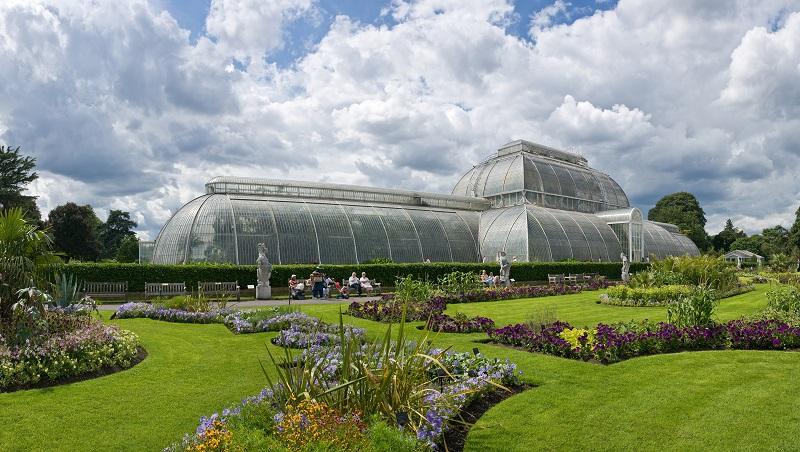
The Temperate House, the largest Victorian glasshouse in existence, debuted to the public in 1863, solidifying its status as an esteemed emblem of Kew. Following a substantial five-year closure for extensive renovations, the Temperate House triumphantly reopened its doors in 2018.
This magnificent structure nurtures a staggering flora within its grand enclosure, boasting an impressive collection of 10,000 distinctive plant species comprising 1,500 different types. Among these botanical treasures are some of the world’s most extraordinary temperate plants, many of which teeter on the brink of rarity and endangerment.
These remarkable specimens originate from diverse corners of the globe, hailing from Africa, Australia, New Zealand, the Americas, Asia, and the Pacific Islands. Notably, each species within this beautiful sanctuary requires temperatures exceeding 50 degrees to sustain its vitality.
The Treetop Walkway
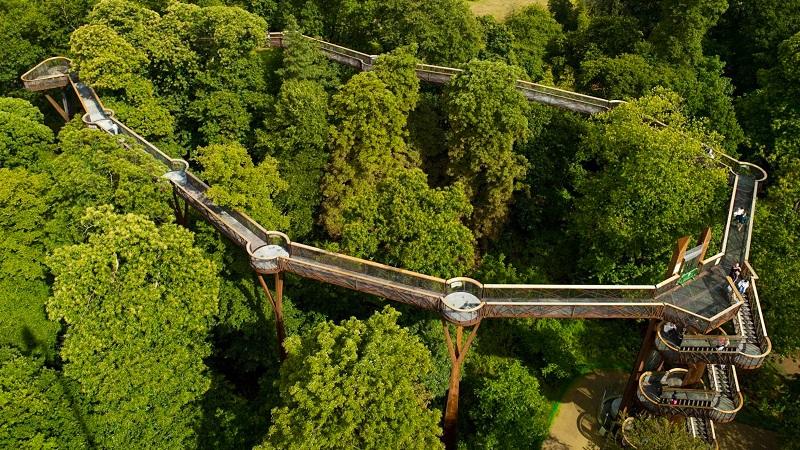
Kew Gardens boasts 14,000 diverse tree species collections, making it a true arboreal haven. The Treetop Walkway offers an ideal vantage point for those seeking a closer encounter with these majestic trees and breathtaking panoramas of the Garden and the city beyond. Rising to a height of 59 feet, the walkway is skillfully constructed using weathered steel that seamlessly blends into the natural surroundings.
Spanning a total length of 656 feet, it gracefully meanders through the upper branches of oak, beech, horse chestnut, and sweet chestnut trees. This elevated promenade presents an unparalleled, ethereal vista of the surrounding landscape. From this elevated perch, you’ll be treated to mesmerizing views of avian and insect activity while the gentle rustling of leaves in the breeze creates a symphony for the senses.
Conclusion
Kew Gardens stands out as a renowned botanical oasis, deserving of its fame for numerous compelling reasons. Nestled near London, this sprawling 330-acre haven embraces an extensive array of plant species, offering an unparalleled opportunity to explore and discover diverse cultures and ecosystems. Moreover, this enchanting Garden caters to all your needs, ensuring a delightful and gratifying visit.