Guide to Kaieteur: Guyana’s Gushing Nature Reserve
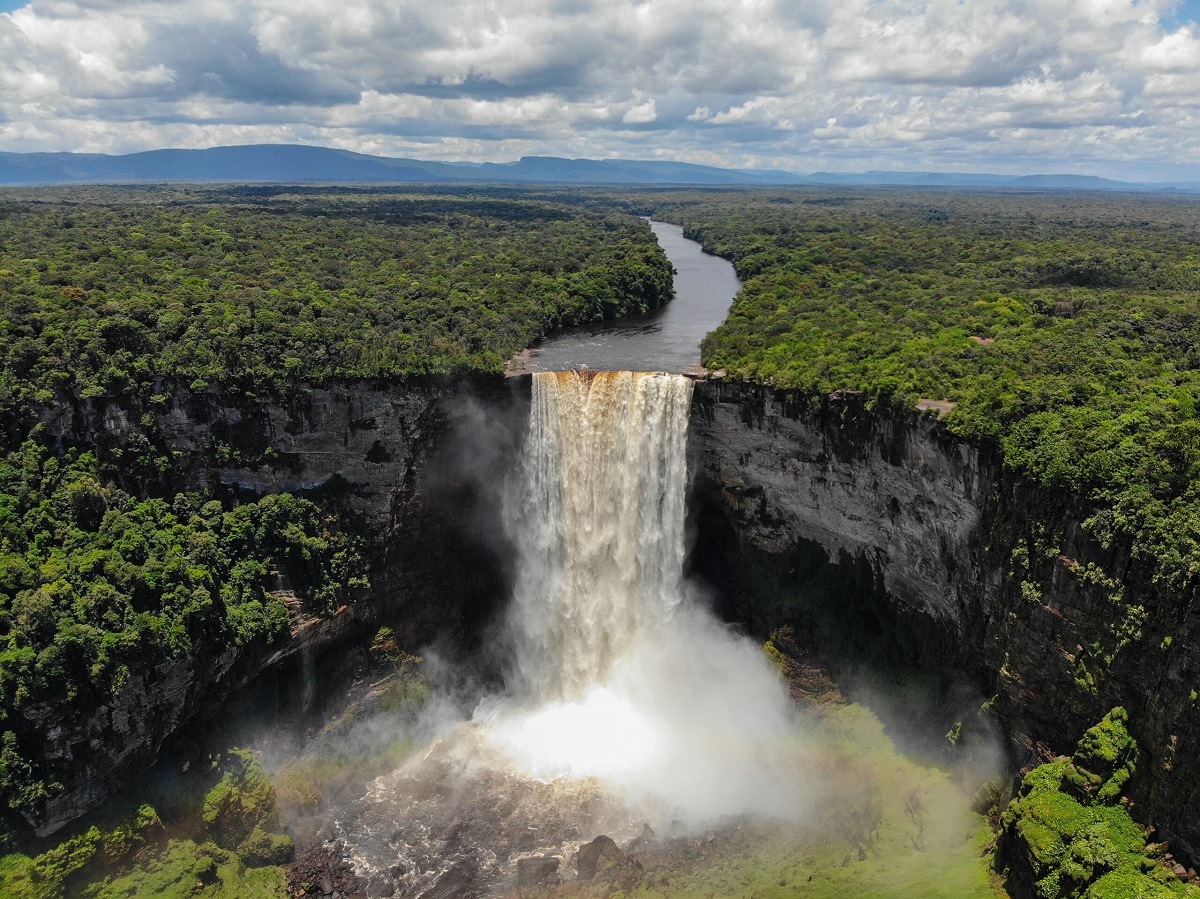
Guyana’s Kaieteur National Park is a place where raw wilderness still reigns supreme. Tucked deep within the Amazon rainforest, it is one of the country’s most treasured natural wonders. The park is home to the breathtaking Kaieteur Falls, often described as one of the world’s most powerful single-drop waterfalls.
Plunging 741 feet into the Potaro River below, Kaieteur Falls dwarfs both Niagara and Victoria Falls in height and remains remarkably untouched by mass tourism. The sound of rushing water echoes through the dense forest, creating an atmosphere that feels both humbling and otherworldly. The park itself was established in 1929, making it one of the earliest protected areas in South America.
It covers stretches of pristine rainforest that hosts an incredible diversity of life. Many often come for the falls but soon find themselves immersed in a landscape that shelters rare and endemic species. For instance, golden frogs, no bigger than a fingernail, are found near the giant tank bromeliads. The park’s diversity is simply unmatched. Here’s our comprehensive guide to Kaieteur National Park;
Please Download Our Mobile App here.
Overview of Kaieteur National Park
Found on the western side of central Guyana, Kaietuer is the country’s only national park dedicated to the protection of its wilderness and natural heritage. Spanning 242 square miles (630 sq km), it safeguards a remarkable stretch of rainforest that lies within the Guiana Shield. The region is known for its ancient highlands and thriving ecosystems.
At the heart of the park lies Kaieteur Falls, a thundering cascade fed by the Potaro River. It eventually merges with the Essequibo River, the longest in Guyana and one of South America’s most dramatic waterways. The falls plunge 226 meters into a gorge stretching 32 kilometers. The spectacle creates one of the world’s most powerful single-drop waterfalls with a maximum flow of 663 cubic meters per second.
Surrounding the falls, the landscape unfolds into vast rivers, sweeping savannas, and dense rainforest teeming with biodiversity. The park is also a place of living history. Here, you’ll find small Amerindian communities whose ancestors have thrived in these forests for thousands of years.
Also Read: Top Things to Do in Guyana.
Wildlife in Kaieteur National Park

The wildlife of Kaieteur thrives in the dense Amazonian rainforest and along the network of waterways that carve through it. Among the animals most sought after by visitors are the elusive jaguar and the playful giant otter, both of which symbolize the untamed spirit of the region. The park also shelters South America’s largest butterfly, a dazzling sight that adds color to the thick green canopy.
You’ll also glimpse the tiny golden rocket frog, found only in Kaieteur. It clings to the giant bromeliads near the falls. Bird enthusiasts are particularly drawn to the brilliantly hued Guianan cock-of-the-rock, a species that has become emblematic to the park. These varied habitats also sustain several endangered species such as the Harpy eagle, scarlet macaw, giant armadillo, giant anteater, and the rarely seen bush dog.
Best Time to Visit Kaieteur National Park
The best time to visit Kaieteur is between February and April or from late September to November, when the falls are at their most dramatic. These windows come right after Guyana’s rainy seasons, meaning the Potaro River is swollen and the cascade plunges in full force.
At the same time, the skies tend to clear, making conditions more favorable for the small aircraft flights that bring most travelers to the park. While Kaieteur can be visited throughout the year, it is important to remember that weather in a tropical rainforest is unpredictable.
Flights are often delayed or canceled depending on conditions. The falls themselves change character with the seasons, surging with raw power after heavy rains and revealing more of the underlying rock face during drier spells. Timing your visit during these post-rainy months will give you the best combination of powerful water flow, clearer skies, and unforgettable photographs.
Getting to Kaieteur National Park

Reaching Kaieteur National Park is very much part of the adventure, and you generally have two very different options of getting there. The quickest and most popular way is by air, with small chartered flights departing daily from Eugene F. Correia International Airport in Georgetown. Several local airlines, including Trans Guyana Airways and Air Services Limited, operate these routes.
Also, tour companies can arrange packages that include both flights and guiding services. The flight itself takes about an hour and offers sweeping views of the endless rainforest before landing on a remote airstrip. For those drawn to a more demanding journey, the overland route provides a rugged alternative.
It begins with a nine-hour minibus ride from Georgetown’s Stabroek Market to the mining town of Mahdia. Once there, you’ll take a taxi ride to Pamela Landing and then a boat trip up the Potaro River. The journey is quite the adventurous one. You’ll navigate the Amatuk and Waratuk rapids. From Tukeit, the last stage is a two to three-hour jungle hike that eventually leads to the falls.
While slower and considerably more strenuous, this route appeals to seasoned trekkers looking for immersion in Guyana’s wilderness. Regardless of how you arrive, entry to the park is only possible on a guided tour, with most visitors choosing a day trip from Georgetown that ensures both safety and convenience. Guided tours usually take between 90 minutes and two hours, depending on preferred package and tour company.
Other Activities in Kaieteur National Park
While the thundering Kaieteur Falls is undeniably the centerpiece of the park, the surrounding rainforest offers more than just a single breathtaking view. The falls stretch nearly 400 feet wide and unleashing an extraordinary flow of 23,400 cubic feet of water per second.
You can admire this natural spectacle from several vantage points like Johnson’s Lookout, Boy Scout, Rainbow, Break, and Lookout. Beyond Kaieteur, the park also rewards travelers with a visit to Orinduik Falls, a series of smaller cascades that tumble over multiple levels.
Unlike Kaieteur’s raw force, Orinduik invites a slower pace, with natural swimming holes that provide a refreshing dip in the middle of the rainforest. Hiking through the surrounding jungle adds to the experience. The distant roar of falling water mingles with birdcalls and the hum of the forest, creating a sense of complete immersion in the wild beauty of Guyana.
Park Fees in Kaieteur National Park

Visiting Kaieteur National Park is only possible through organized guided tours, and the costs involved are generally bundled into the overall package. Most day tours from Georgetown range between $300 and $375, covering flights to the park and the guided experience at the falls.
Depending on the operator, there may be additional charges once you arrive. These include a park entrance fee of 3000 Guyanese dollars (about $14) and a group guide fee of 4500 Guyanese dollars (around $21).
FAQs
Is Kaieteur National Park worth visiting?
Yes, Kaieteur National Park is absolutely worth visiting. The park’s centerpiece, the world-renowned Kaieteur Falls, leaves many speechless with its sheer power and beauty. Beyond the falls, the park offers an unspoiled natural setting that feels far removed from the modern world.
How long to spend in Kaieteur National Park?
Most travelers experience Kaieteur on a day trip from Georgetown. This involves a one-hour flight over the rainforest followed by roughly two hours on the ground to admire the falls and walk the surrounding trails. This is enough time to witness the highlights but it’s only a glimpse into the park’s vast wilderness. If you want more time, many tour companies offer multi-day packages.
Conclusion
For many who visit, Kaieteur National Park is not only about seeing the falls but about connecting with an environment that feels timeless. The park embodies Guyana’s identity as one of the least explored corners of South America. Whether standing on the cliffside watching the water crash below or listening to the calls of unseen birds in the canopy, the experience leaves a lasting impression.