Guide to Sundarbans: India’s Mangrove Safari
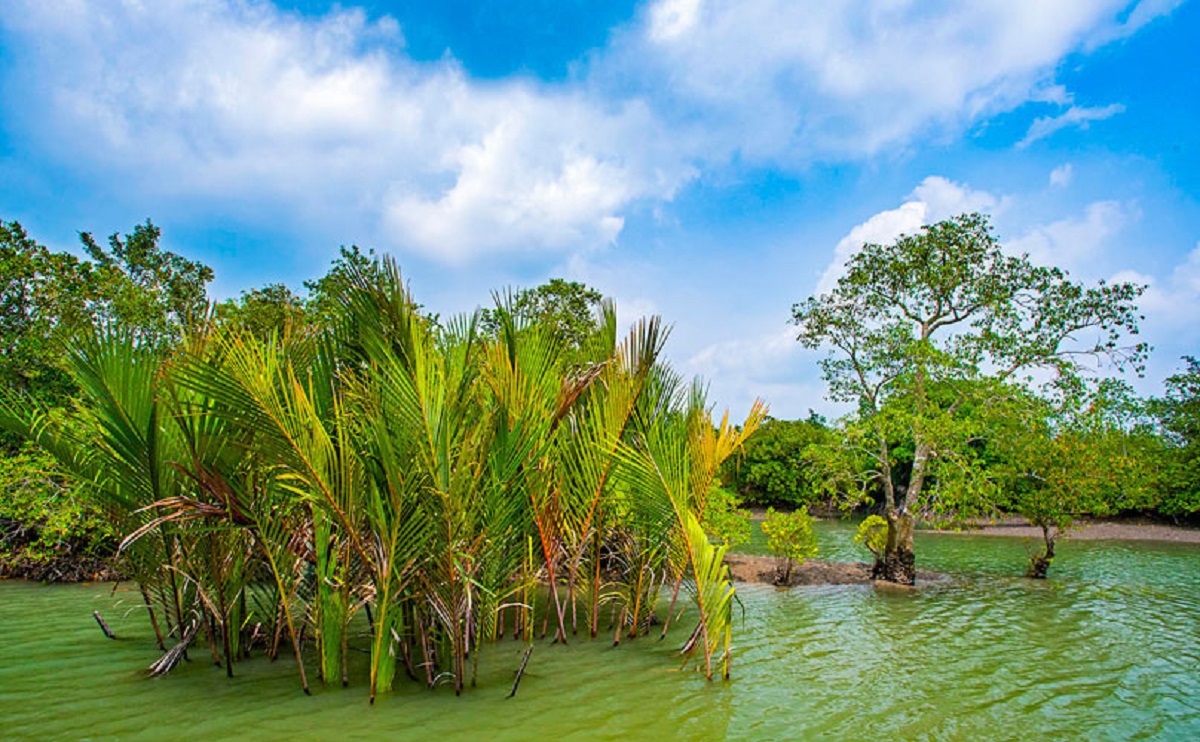
Nestled in the delta of the mighty Ganges and Brahmaputra, and Meghna rivers, Sundarbans National Park is one of India’s most fascinating wildlife reserves. Located in the southern part of West Bengal, this UNESCO World Heritage Site is renowned for its dense mangrove forests, diverse wildlife, and unique ecosystem shaped by tidal waterways and mudflats.
The Sundarbans is home to the world’s largest population of Royal Bengal tigers. These magnificent big cats have adapted to the region’s amphibious terrain, often swimming across the intricate network of rivers and creeks. Here’s our comprehensive guide to Sundarbans National Park;
Please Download Our Mobile App here.
Overview of Sundarbans National Park
Located on the eastern edge of India along the border with Bangladesh, Sundarbans National Park spans an impressive 513.55 square miles (1,330.10 sq km). This vast park is part of the world’s largest mangrove forest, thriving across the Ganges Delta. The region’s unique terrain is shaped by the Ganges River, which meanders through the landscape and creates a delta with 54 islands.
The park has an average elevation of only 24.6 feet (7.5 m). The delta is nourished by a network of seven major rivers and numerous smaller waterways. The tides here range between 9.8 to 26.2 feet (3 to 8 m), exposing expansive mudflats when the tide is low.
The park’s name is derived from the Sundari tree, the dominant species in the forest, contributing to the dense mangrove ecosystem. This lush, waterlogged environment serves as a sanctuary for over 400 Bengal tigers, making the Sundarbans one of the largest tiger reserves globally.
Wildlife in Sundarbans National Park
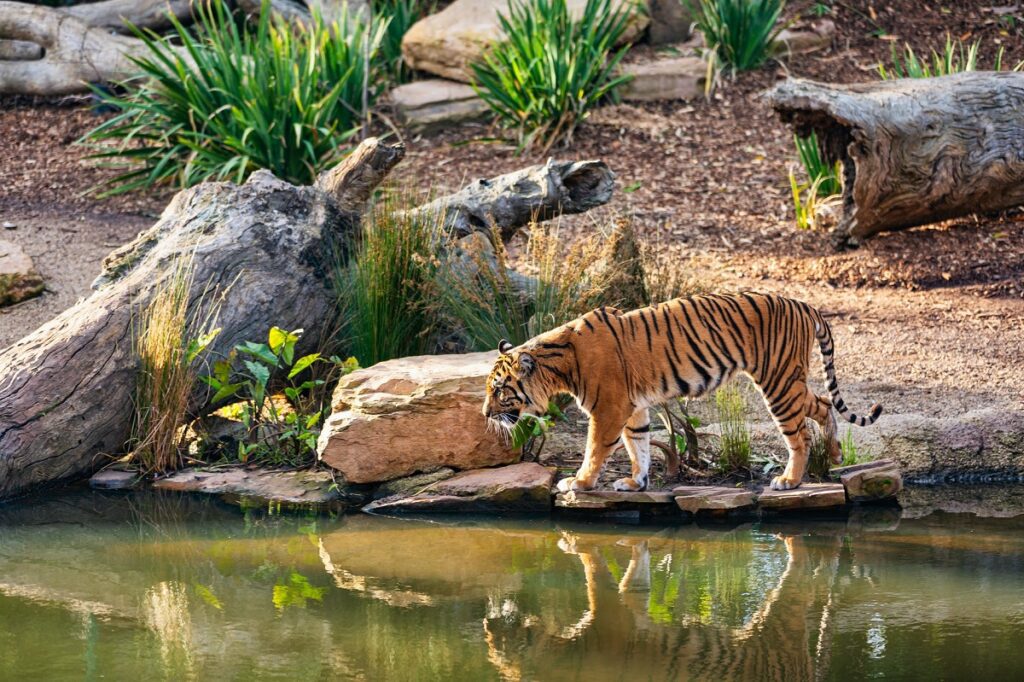
Sundarbans National Park is renowned for being home the largest tiger populations globally. There are over 400 Bengal tigers recorded within the park, making one of the few places on earth where you can glimpse the elusive big cat. But the Bengal tiger is not the only resident of the park, you’ll also find other elusive carnivores such as leopard cats, fishing cats, jungle cats, and foxes.
The region is also teeming with a variety of smaller creatures, including mongoose, flying foxes, and macaque monkeys, alongside the graceful chital. The Sundarbans is a paradise for birdwatchers, offering a wealth of avian species, many of which are rare or exotic. Among its more fascinating wildlife are the elusive king cobra, vibrant chameleons, fearsome saltwater crocodiles, and the endangered Ganges river dolphins.
Best Time to Visit Sundarbans National Park
The best time to visit Sundarbans National Park is during the winter months, from November to February. During the months, the weather is at its most pleasant and comfortable. Temperatures during this period range from 10°C to 25°C, making it perfect for outdoor exploration. This is also the best time for wildlife spotting, as animals emerge from the dense forest and gather along the riverbanks to bask in the sun.
Boat safaris are particularly enjoyable, offering an intimate way to explore the park’s intricate mangrove forests and waterways. Additionally, birdwatchers can take advantage of the winter season to spot migrating and seasonal bird species that flock to the area.
While the monsoon season (June to October) brings heavy rainfall and transforms the landscape into a lush, vibrant spectacle, it can be challenging for wildlife viewing. Conversely, the summer months (March to May) are hot and humid, but this the best time to spot Bengal tigers.
Getting to Sundarbans National Park

To reach Sundarbans National Park, you’ll first need to fly into Kolkata, at the Netaji Subhash Chandra Bose International Airport (CCU). Once you’ve landed in Kolkata, your next step is to travel to Canning, located about 48 kilometers away. You can either catch a train from Kolkata to Canning Railway Station or take a bus, depending on your preference for speed or comfort.
Alternatively, you can also reach the park from nearby Sonakhali or Godkhali. Keep in mind that within the park itself, boats are largely the main means of transportation, giving you a true water-bound adventure through this unique ecosystem.
Other Activities in Sundarbans National Park
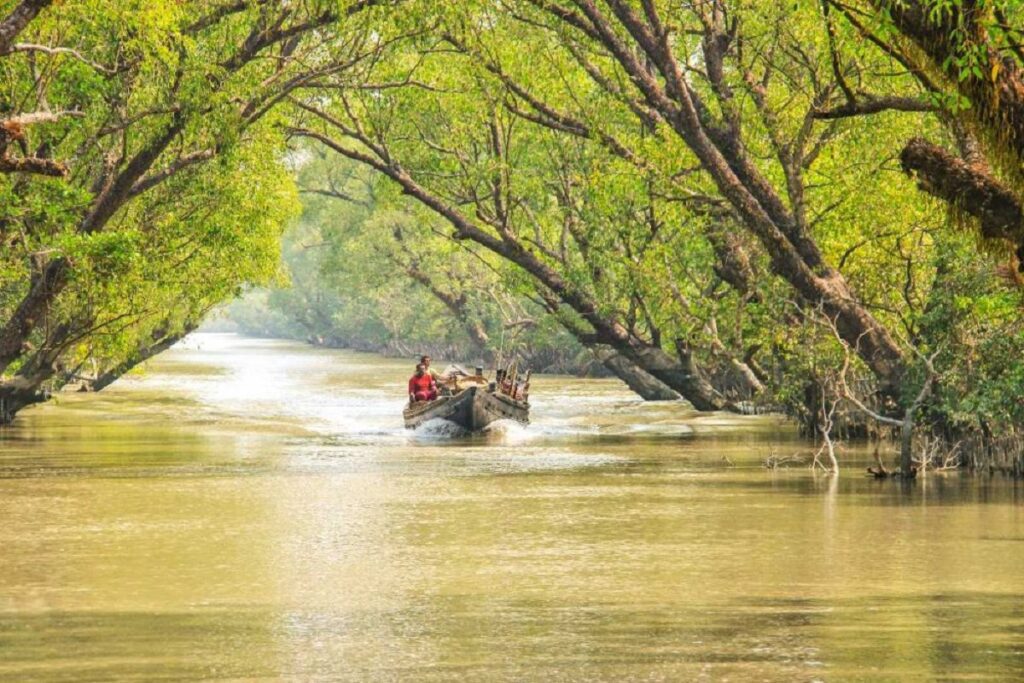
Sundarbans National Park is primarily known for its unique mangrove forest, and the best way to explore it is through a boat safari. This offers an up-close experience of the delta’s diverse ecosystems. While the boat safari is the main method of exploration, visitors also have the opportunity to venture on foot in certain areas. This allows for a more immersive experience in the forest’s various parts.
Unlike traditional safaris, there are no jeep rides here; all exploration happens from the safety of the boat, making it a thrilling adventure. This significantly increases the chances of spotting the park’s diverse wildlife. For birding enthusiasts, head to the Sajnekhali Watch Tower.
The four-story structure offers stunning panoramic views of the surrounding mangrove terrain and is also an excellent spot for seeing other wildlife. Another intriguing spot within the park is Burirdabri, where you can explore the mud flats and the mangrove cage trail. From the watchtower here, visitors can even catch glimpses of the Sundarbans’ Bangladesh side.
Park Fees in Sundarbans National Park
Sundarbans National Park charges entry fees but there are also other fees like boat safaris that you must acquaint yourself with. Indian nationals are required to pay INR 180 ($2.20) per day, while foreign tourists pay INR 1500 ($18) per day.
You’ll like explore the park on a boat. Boat safaris start at around INR 1000 ($12) per day. For those opting for guided tours, there are additional guide fees: Indian tourists are charged INR 800 ($9.70) per day, while foreign tourists pay INR 2000 ($24).
FAQs
What time does the Sundarban National Park open?
Sundarbans National Park is open for visitors during specific hours throughout the week. From Monday to Friday, the park welcomes guests from 8:00 AM to 6:00 PM, allowing ample time to explore the stunning biodiversity and take part in safaris. On Saturdays, the park operates from 10:00 AM to 4:00 PM. The forest area is closed on Sundays.
Is Sundarban National Park worth visiting?
Yes, Sundarbans National Park is definitely worth visiting! As a UNESCO World Heritage site, it holds significant global importance. The park is not only the world’s largest mangrove forest but also the largest delta, formed by the confluence of three mighty rivers—the Ganga, Brahmaputra, and Meghna.
Conclusion
Sundarbans National Park is more than just a wildlife sanctuary—it is a testament to nature’s resilience and diversity. From its stealthy Bengal tigers to its labyrinth of mangrove forests, the park offers an unparalleled experience for nature lovers, wildlife enthusiasts, and adventurers.